
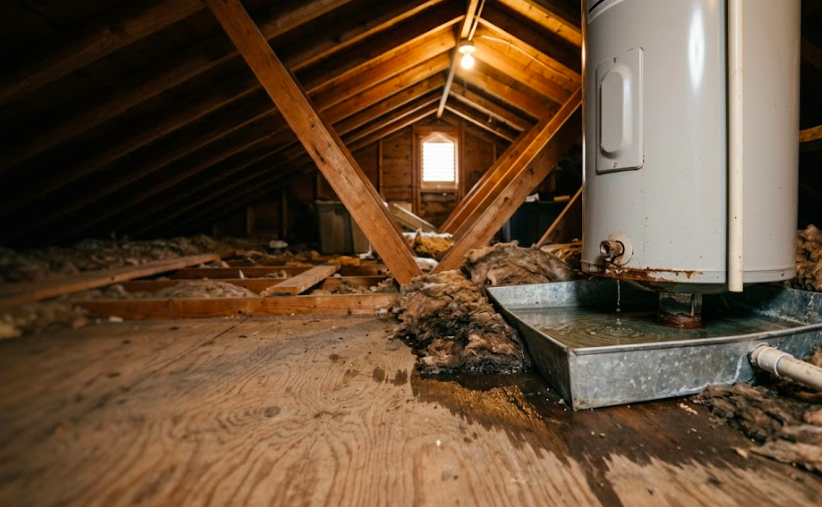
A water heater in the basement or utility closet is easy to forget about. A water heater in the attic or garage is a different story. When it fails in the attic, the water has nowhere to go but down through your ceiling, insulation, and drywall. In the garage, it can ruin stored belongings and spread into your home’s living space.
This guide covers why these locations carry extra risk, what drain pans and codes actually require, the warning signs of a failing tank, and what to do if the worst happens.
Why Attic and Garage Installations Are Higher Risk
Most homeowners don’t pick the location. It was decided when the home was built, often to save floor space in a smaller house or in a slab-on-grade foundation where there is no basement. But the location matters a lot when a tank fails.
Attic installations
- Gravity works against you: Water from a leaking tank soaks insulation, runs along joists, and drops through the ceiling below. By the time you see a stain, the damage is usually widespread.
- Leaks go unnoticed: Few people check their attic regularly. A slow drip can run for weeks or months.
- Heat accelerates wear: Summer attic temperatures can climb well above outdoor temperatures, which stresses fittings, connectors, and the tank’s exterior.
- Hard to service: Tight access makes inspection, flushing, and replacement harder, so maintenance gets skipped.
Garage installations
- Vehicle and impact risk: A bumped tank or damaged water line can cause a sudden leak.
- Moisture and temperature swings: Garages see humidity, dust, and temperature changes that can speed up corrosion on the tank and connections.
- Stored items in the path: Boxes, tools, and cardboard soak up water fast, and a garage leak can spread under the wall into the home.
- Flammable vapor concerns: Gasoline vapors from vehicles and stored products are heavier than air, so gas-fired heaters in garages have special code rules (more on this below).
Why Water Heaters Leak in the First Place
Knowing the cause helps you spot trouble early. The most common sources are:
- Tank corrosion – Over time, the steel tank rusts from the inside. Once the tank wall is compromised, it leaks, and it can’t be repaired. It must be replaced.
- Sediment buildup – Minerals settle at the bottom of the tank, causing overheating, noise, and premature failure.
- Failed anode rod – The sacrificial anode rod protects the tank from corrosion. Once it is used up, the tank itself starts to corrode.
- High water pressure – Pressure above normal limits stresses the tank and every fitting connected to it.
- Faulty temperature and pressure relief (T&P) valve – A valve that is worn or reacting to excess pressure or heat can discharge water.
- Loose or corroded connections – Supply lines, fittings, and drain valves can drip long before the tank fails.
- Age – Most standard tank water heaters last roughly 8 to 12 years. Past that range, the odds of failure rise sharply.
Warning Signs Your Water Heater Is About to Leak
Catch these early and you can replace the unit on your schedule instead of during an emergency:
- Moisture, rust streaks, or puddles around the base of the tank
- Rust-colored or metallic-smelling hot water
- Rumbling, popping, or knocking sounds (sediment)
- Water stains on ceilings below an attic unit
- Damp insulation or musty odors near the unit
- A T&P valve or discharge pipe that is dripping
- A unit more than 10 years old with no recent inspection
- Inconsistent water temperature or reduced hot water supply
If you see any of these, shut off the water supply to the heater and call a licensed plumber.
What Is a Water Heater Drain Pan?
A water heater drain pan is a shallow, rimmed pan that sits under the tank to catch minor leaks and condensation. Ideally it is connected to a drain pipe that carries the water to a safe place, such as outside or a proper drain, instead of letting it pool in the pan.
A pan will not stop a catastrophic tank rupture, but it will:
- Catch slow leaks and drips before they damage floors or ceilings
- Buy you time to notice and fix a problem
- Direct water to a safe discharge point when properly piped
- Often satisfy code and manufacturer requirements
Drain Pan Requirements: What the Code Generally Says
Plumbing codes are adopted and amended locally, so your city or county may differ. The model codes (such as the International Residential Code and the International Plumbing Code) give a good picture of what inspectors typically look for:
When a pan is required
- Codes generally require a pan when a water heater is installed in a location where a leak could cause damage. Attics, upper floors, and spaces above finished living areas are the classic examples, and garages and utility closets inside the home commonly fall under the same rule.
Pan construction
- The pan is usually required to be at least about 1.5 inches deep.
- It must be made of an approved material, such as galvanized steel, plastic, or other corrosion-resistant material.
- It should be large enough to fit under the entire tank with some margin.
Pan drain line
- The pan should have a drain outlet, typically at least 3/4 inch in diameter.
- The line should slope downward and discharge to an approved location, such as outdoors or an approved drain, not into a wall cavity or hidden space.
- It should not be tied into the T&P valve discharge pipe.
T&P valve discharge pipe
- The relief valve discharge line should be full size, run downward without traps or valves, and terminate in a safe location. Never cap or plug it.
Additional garage rules for gas and electric heaters
- Gas-fired and some other fuel-burning heaters in garages are generally required to have the burner or ignition source elevated (commonly 18 inches above the floor) so it doesn’t ignite flammable vapors.
- Heaters in garages typically must be protected from vehicle impact, for example with bollards or a barrier.
Additional attic rules
- Codes generally require a safe, permanent access path to the unit, a working platform, and a light and outlet near the equipment so it can be serviced.
Important: These are general guidelines, not a substitute for your local code. Always confirm requirements with your local building department and a licensed plumber, and follow the manufacturer’s installation instructions.
Best Practices Beyond the Minimum Code
Passing inspection is the floor, not the ceiling. For attic and garage units, consider:
- Install a pan with a properly routed drain line, and test that water actually flows out.
- Add a leak detector, A battery-powered or smart sensor in the pan alerts you at the first drop, and it is one of the cheapest forms of insurance.
- Consider an automatic shut-off valve. These devices sense a leak and close the water supply to the heater.
- Install a thermal expansion tank if your home has a closed plumbing system or a pressure-reducing valve, to protect against pressure spikes.
- Flush the tank annually to reduce sediment buildup.
- Inspect or replace the anode rod around every few years, depending on your water quality.
- Test the T&P valve periodically, following the manufacturer’s directions.
- Check water pressure, If it runs high, install or adjust a pressure regulator.
- Plan replacement before failure, Once a tank passes the 8 to 10 year mark, start budgeting and planning.
- Keep the area clear, Don’t store boxes or flammables around the unit.
Should You Move the Water Heater or Switch Types?
If your attic unit is aging and the layout allows, replacement is a good time to reconsider placement or technology:
- Relocating to a lower, more accessible spot can reduce risk and make service easier.
- A tankless water heater holds little to no stored water, which sharply reduces the volume that can leak. Tankless units still need correct installation, venting, and maintenance.
- A heat pump water heater is efficient but needs adequate space and airflow, and makes condensate that must be drained.
For efficiency comparisons and buying considerations, the U.S. Department of Energy offers a helpful overview of storage water heaters.
What to Do If Your Water Heater Leaks
Fast action limits the damage:
- Turn off the power or gas to the water heater at the breaker or gas shut-off.
- Shut off the cold water supply to the tank.
- Don’t touch wet electrical components. If water is near outlets, wiring, or the breaker panel, stay clear and turn off power from a dry location.
- Stop the water if you safely can, and drain the tank if instructed by a plumber.
- Move belongings out of the affected area.
- Document everything with photos and video before cleanup, for your insurance claim.
- Call a licensed plumber to diagnose and replace the unit.
- Call a water damage restoration company right away. Water in ceilings, insulation, and walls can lead to mold within 24 to 48 hours if it isn’t dried properly.
If you’re in the Rio Grande Valley, a local team like McAllen water damage restoration specialists can handle extraction, structural drying, and moisture monitoring so a leak doesn’t turn into a long-term mold and rot problem.
Insurance and Water Heater Leaks: What Homeowners Should Know
Coverage differs by policy, but a few general points apply:
- Sudden and accidental discharge, such as a burst tank, is often covered for resulting damage.
- Gradual leaks that go on for a long time, or damage from poor maintenance, may be excluded.
- The water heater itself usually is not covered when it fails from age or wear, though the resulting damage may be.
Keeping maintenance records, installing leak detection, and acting quickly after a leak can all support a smoother claim. Read your policy and ask your agent about water damage coverage. For permits, code, and licensing, you can reference the International Code Council’s code resources and your local building authority.
Hiring a Pro: Questions to Ask
Because attic and garage installs have extra code and safety requirements, hire a licensed plumber and ask:
- Are you licensed and insured in our area?
- Will you pull a permit and schedule the inspection?
- Will the installation include a code-compliant drain pan and discharge piping?
- Is an expansion tank needed for my system?
- What warranty covers the tank and the labor?
- What are my options for relocating or switching to tankless?
For general consumer safety guidance on household products, including hot water scald prevention, the U.S. Consumer Product Safety Commission is a solid resource.
Quick Checklist: Attic or Garage Water Heater
- Drain pan installed under the tank, at least 1.5″ deep
- Pan drain line routed to a safe discharge point
- T&P discharge pipe installed correctly
- Leak sensor or auto shut-off valve in place
- Expansion tank if required
- Heater elevated and protected from vehicle impact (garage)
- Safe access, lighting, and work platform (attic)
- Annual flush and periodic anode inspection
- Replacement planned before the 10 to 12 year mark
Final Thoughts
A water heater in the attic or garage isn’t a problem by itself. An unprotected one is. A proper drain pan with a working drain line, a leak detector, regular maintenance, and timely replacement can turn a potential disaster into a minor repair.
If your water heater is aging, leaking, or missing a drain pan, don’t wait for a ceiling to come down. Need help with replacement, a code-compliant drain pan, or a full water heater installation? Visit Allstate Plumbing Heat & Air Lake Travis to schedule service with licensed professionals.
Leave a Reply