
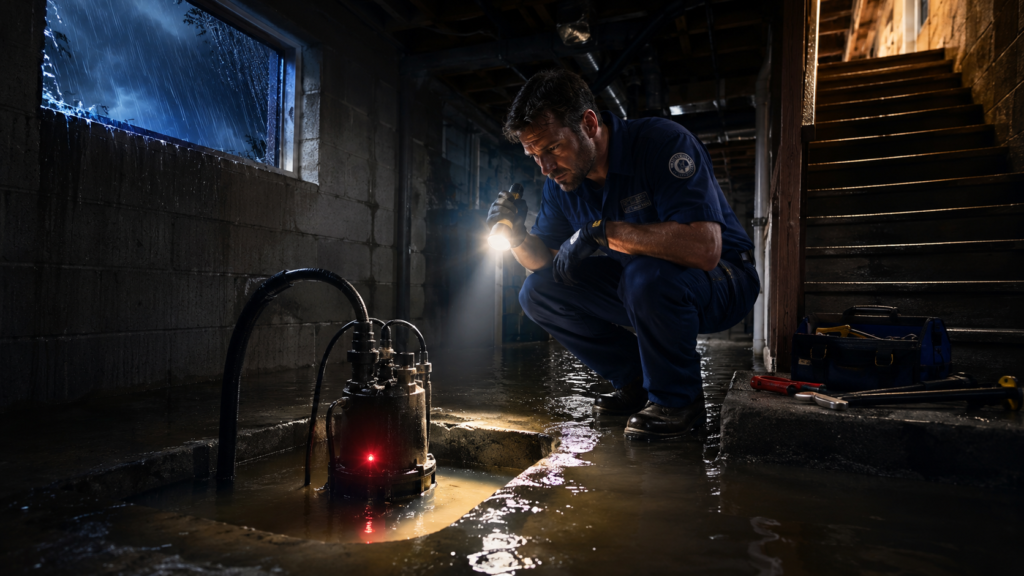
The storm hits, the rain pounds and then you hear that dreaded silence from the basement. Your sump pump has stopped working, and water is starting to creep across the floor. In that moment, knowing exactly who to call and what can realistically be fixed on the spot could save your home thousands of dollars in damage.
At Allstate Plumbing Heat & Air, we respond to emergency sump pump failures across Austin and Lake Travis every storm season. One question we get constantly: “Is this a plumbing problem you can fix, or do I need a restoration company?” The honest answer? Sometimes it’s one, sometimes the other, and very often it’s both in that order.
This guide walks you through how to tell the difference, what our licensed plumbers can handle immediately during a storm emergency, and when you need to bring in specialized water damage restoration professionals to protect your home’s structure and air quality.
Why Sump Pumps Fail During Storms (And Why Timing Matters So Much)
Sump pumps are your home’s last line of defense against groundwater intrusion. During a Texas storm especially around Lake Travis and the Hill Country where heavy runoff is common your sump pump can be working overtime for hours. The most common failure points during storms are not random; they follow predictable patterns that a plumber can diagnose within minutes.
The Most Common Storm-Time Sump Pump Failures
Understanding the root cause of the failure tells you immediately whether you need a plumber, a restoration team, or both:
| Failure Type | What’s Happening | Who Handles It |
|---|---|---|
| Power outage / tripped breaker | Storm knocks out power or overloads circuit; pump loses power | Plumber |
| Float switch stuck or misaligned | Float can’t rise to trigger pump activation | Plumber |
| Pump motor burnout | Pump ran too long without rest during extended storm | Plumber |
| Clogged or frozen discharge line | Water has nowhere to go; pump runs but can’t expel water | Plumber |
| Undersized pump for storm volume | Pump overwhelmed; water enters faster than it can be expelled | Plumber |
| Standing water (under 24 hours) | Flooding present but structure not yet saturated | Restoration |
| Soaked drywall, subfloor, insulation | Materials have absorbed water; mold risk is high | Restoration |
| Sewage backup mixed with floodwater | Category 3 water contamination; biohazard protocols required | Restoration |
The 24-Hour RuleWater that sits for more than 24 hours begins penetrating porous building materials drywall, wood framing, carpet padding, and insulation. Once saturation occurs, simply pumping out the water is no longer enough. Drying, testing, and potentially removing materials becomes necessary. Speed on both fronts plumbing repair and water extraction is critical.
What a Licensed Plumber Can Fix During or After a Storm
When our emergency team arrives at your Austin or Lake Travis home, here is what we can diagnose and typically resolve on the same visit even mid-storm:
1. Electrical and Power Failures
If the pump has power but won’t run, we check the GFCI outlet, the breaker, and the pump’s internal thermal overload switch. Often, resetting a tripped breaker or replacing a faulty GFCI is all that stands between you and a functioning pump. We also test whether the pump is drawing the correct amperage a sign of internal motor health.
2. Float Switch Repair or Replacement
The float switch is the most mechanically vulnerable part of a sump pump. It can get tangled, stuck against the pit wall, or simply fail due to age. Replacing a float switch is a quick repair usually under an hour that restores automatic operation immediately. We always test the new switch through multiple cycles before we leave.
3. Pump Motor Replacement
If your pump motor has burned out from continuous operation during a prolonged storm, we carry common pump models in our service vehicles. A motor replacement or full pump swap particularly for submersible pedestal pumps in the ¼ HP to 1 HP range common in Central Texas homes can often be completed on the same emergency call.
4. Clearing a Blocked or Frozen Discharge Line
The discharge line carries water from the pit out of the house usually to a yard drain, dry well, or municipal storm drain. If this line is clogged with debris, frozen (less common in Austin but possible during winter storms), or disconnected at a joint, the pump runs but water has nowhere to go. We clear blockages, repair disconnected joints, and in some cases reroute discharge to a better exit point.
Need emergency plumbing help right now? Our licensed team at Allstate Plumbing Heat & Air is available 24/7 across Austin and Lake Travis. Call (737) 313-2650 for immediate dispatch.
5. Installing a Backup Sump Pump
One of the smartest upgrades we recommend after any storm-related pump failure is a battery backup sump pump. These units sit alongside your primary pump and activate automatically when the main pump fails or loses power. We install and configure backup systems during the same visit as a repair in most cases.
6. Sump Pit Inspection and Cleaning
Sediment, gravel, and debris can accumulate in the sump pit over time and interfere with float operation or clog the pump intake. We clean the pit, inspect the liner for cracks, and ensure the weeping tiles or drain tile system feeding into the pit are functioning. This is especially important in older Austin homes with clay-heavy soils that generate significant particulate runoff during heavy rains.
Quick Diagnostic Checklist What Your Plumber Will Check
- Power supply: outlet, GFCI, circuit breaker
- Float switch: position, movement, wiring
- Pump motor: amperage draw, impeller condition
- Discharge line: blockage, slope, exterior exit point
- Check valve: preventing backflow into pit
- Pit condition: debris, sediment, liner integrity
- Backup system: present, functional, battery level
When Plumbing Fixes Are Not Enough: Recognizing the Need for Restoration
Here is the reality that homeowners often don’t hear: fixing the sump pump stops the source of the flooding, but it does not undo the damage already done to your home’s structure and contents. That distinction is critical and conflating the two can lead to hidden mold growth, warped subfloors, and failed drywall weeks after the storm.
“A plumber fixes the pipe. A restoration company fixes the building. When a storm flood affects your home, you almost always need both.”
Signs You Need Professional Water Damage Restoration
- Water has been standing for more than 12–24 hours
- Carpet, padding, or hardwood flooring is saturated
- Drywall shows visible moisture, soft spots, or bubbling paint
- A musty or earthy smell persists after water removal
- Floodwater mixed with sewage backup (Category 3 contamination)
- Insulation in crawl spaces or walls is wet
- Structural wood (joists, subfloor) feels soft or discolored
- HVAC ductwork was submerged or exposed to floodwater
Water damage restoration involves industrial-grade water extraction, professional-grade drying equipment (dehumidifiers, air movers), moisture mapping with thermal imaging, antimicrobial treatment, and in severe cases, controlled demolition and rebuilding of saturated materials. This is a fundamentally different scope of work from plumbing repair and it requires specialized licensing and equipment.
🚨 Critical: Mold Can Begin Growing in 24–48 HoursOnce porous building materials reach saturation, mold colonization can begin within 24 to 48 hours even in Texas’s hot climate. If restoration professionals are not on-site extracting water and initiating drying within that window, you may be dealing with a remediation project rather than a simple drying project. The cost difference between the two can be significant.
What a Restoration Company Does That a Plumber Cannot
For homeowners in the Austin and Lake Travis area who have experienced structural water intrusion, we recommend reaching out to a certified water damage restoration specialist. If you are in the broader region or dealing with flood aftermath that extended beyond your local area, the team at Akron OH Water Damage offers a solid example of what a properly equipped restoration company’s service scope looks like from water extraction and drying documentation to mold testing and full structural drying protocols. Understanding what professional restoration involves helps you ask the right questions of any provider you hire locally.
Certified restoration professionals use moisture meters and thermal imaging cameras to find water that has wicked into wall cavities, behind baseboards, and under flooring places you can’t see and a standard plumbing visit won’t assess. They also document the damage for insurance purposes, which is important for any storm claim.
The Correct Sequence: What to Do Step by Step When Your Sump Pump Fails in a Storm
1. Ensure Personal Safety First: Never wade into standing water without first confirming power to the area has been shut off at the breaker. Water and live electrical circuits are a lethal combination. If you cannot safely cut power, stay out of the flooded area and call professionals.
2.Call an Emergency Plumber for the Pump: Get the source of water entry under control first. A plumber can restore pump function, identify whether the issue is mechanical or electrical, and get your drainage system working again. This is the first call (737) 313-2650 for Austin and Lake Travis.
3.Document Everything for Insurance: While waiting for help to arrive, take photos and video of all standing water, affected areas, and any visible damage to contents and materials. Note the approximate time the flooding began. This documentation is essential for your homeowner’s insurance claim.
4.Contact a Water Damage Restoration Company: Once the pump is repaired and active water intrusion is stopped, call a restoration company to begin extraction and drying immediately. Do not wait to see how much dries on its own that delay is where secondary mold damage begins.
5.Contact Your Insurance Provider: File a claim and provide your documentation. Many standard homeowner’s policies cover sudden and accidental water damage from sump pump failure, particularly if you carry sewer and drain backup endorsements. Ask your plumber for a written diagnosis report it strengthens your claim.
6.Schedule a Sump System Upgrade Consultation: After the immediate crisis is resolved, ask your plumber to assess your sump system’s capacity and backup readiness. Adding a battery backup unit, upgrading to a higher-capacity pump, or installing a water alarm system can prevent this scenario from repeating.
How to Know If Your Insurance Will Cover Sump Pump Failure Damage
Coverage for sump pump flood damage varies significantly by policy. Here is what homeowners in the Austin and Lake Travis area should know:
Standard homeowner’s policies generally do not cover flooding from external sources (such as rising groundwater or overland flow) that requires separate flood insurance through FEMA’s National Flood Insurance Program. However, sudden and accidental water damage from a sump pump failure may be covered under your standard policy, particularly if you have added a water backup and sump overflow endorsement.
Key questions to ask your insurance agent: Does my policy include a sewer and drain backup rider? What is the sublimit for water backup coverage? Is mechanical breakdown of the sump pump covered? The answers to these three questions will tell you most of what you need to know before filing.
Insurance Documentation Tip: When our plumbers arrive for an emergency sump pump call, we provide a written service report that includes the diagnosis, the cause of failure, and the repairs performed. Request this report for your insurance company it serves as professional documentation that the damage was sudden, accidental, and caused by a specific mechanical failure rather than neglected maintenance.
Sump Pump Maintenance in Austin and Lake Travis: Preventing the Next Failure
The best storm-season sump pump failure is the one that never happens. Central Texas weather brings extreme contrasts long dry spells followed by intense thunderstorms and flash flooding events. A pump that sat dormant for six months may seize, lose lubrication, or develop a failed float switch without any outward signs of trouble until you need it most.
We recommend scheduling an annual sump pump inspection before storm season ideally in late winter or early spring. During a maintenance visit, our plumbers will test the pump under load, clean the pit, inspect and test the float, clear the discharge line, and verify your backup unit is functional and the battery is charged.
Homeowners in Lake Travis communities like Lakeway, Spicewood, and Hudson Bend face additional considerations lake level fluctuations and the heavy clay soils in the Hill Country create unique drainage pressures that can overwhelm standard pump configurations. We are familiar with these local conditions and can recommend appropriate pump sizing and discharge routing for your specific property.
For a broader perspective on what storm-season water damage looks like across different regions—and why proactive restoration planning matters the team at Akron OH Water Damage publishes helpful guidance on water damage prevention and restoration processes that applies regardless of geography.
Sump Pump Failing? We’re Available 24/7 Across Austin & Lake Travis
Don’t wait for the water to rise. Our licensed emergency plumbers are dispatched fast across all Austin neighborhoods and the Lake Travis area including Lakeway, Spicewood, Steiner Ranch, and Hudson Bend. Call (737) 313-2650 Now
Frequently Asked Questions: Sump Pump Failure and Storm Flooding
Can a plumber fix a sump pump during an active storm?
Yes, our emergency team responds to sump pump failures during active weather events. Many repairs (float replacement, motor swap, discharge line clearing) can be performed even with water in the pit. Safety protocols are followed for any electrical components.
How long does it take to replace a sump pump?
A straightforward submersible sump pump replacement typically takes 1 to 2 hours on-site. If we need to source a specific model for an unusual configuration, it may take a follow-up visit, but we carry common models in our emergency vehicles.
What is the difference between Category 1, 2, and 3 water damage?
Category 1 is clean water (broken supply line, overflowing sink). Category 2 is gray water (dishwasher overflow, washing machine discharge). Category 3 is black water sewage, floodwater that has contacted contaminated sources. A sump pump failure during a storm may result in any of the three categories depending on what’s entering the pit. Sewage backup mixed with stormwater is always Category 3 and requires restoration professionals with proper PPE and antimicrobial protocols.
My sump pump is running but the water level isn’t dropping what’s wrong?
This is usually a discharge line problem. The pump is working but water cannot exit the property. Check the exterior discharge point for blockage, ice (in winter), or a collapsed pipe. The check valve on the discharge line may also have failed, allowing pumped water to fall back into the pit. Call us this is a fast diagnosis and typically a quick repair.
Is flood damage covered by homeowner’s insurance if the sump pump failed?
Potentially yes, if you carry a water backup and sump overflow endorsement. Standard policies do not cover this by default. Check your declarations page for a “water backup” or “sump pump overflow” rider. The sublimit on these endorsements is often $5,000–$25,000, so understanding your coverage before a storm is important.
How do I know if I have mold after a sump pump flood?
Early signs include a musty or earthy odor (even if you can’t see mold), discoloration on walls or baseboards, and persistent allergy symptoms in occupants. Mold can grow inside wall cavities without any visible surface signs. If your home flooded and was not professionally dried within 24–48 hours, a professional mold inspection is strongly recommended before assuming the space is safe.
The Bottom Line: Two Different Problems, Two Different Experts
A sump pump failure during a storm is never just one problem it is two. The first is mechanical: the pump itself, its power supply, its discharge path. That is squarely in a licensed plumber’s domain, and it needs to be addressed immediately to stop water from entering the space.
The second problem is structural: what the water that already entered has done to your floors, walls, insulation, and air quality. That requires certified restoration professionals with the right equipment, protocols, and documentation capabilities. Trying to address structural water damage with a shop vac and fans is the mistake that leads to mold claims six weeks later.
At Allstate Plumbing Heat & Air, we handle the first problem fast 24/7, across all of Austin and the Lake Travis corridor. We will also help you understand the scope of any water damage present and guide you toward the right restoration resources so your home gets the complete response it needs.
Storm season in Central Texas is not a matter of if it’s when. Have a plan, have our number, and make sure your sump pump gets inspected before the next system rolls through.
Call Allstate Plumbing Heat & Air any time, day or night: (737) 313-2650
Leave a Reply