
A complete step-by-step troubleshooting guide for Lake Travis homeowners before you pick up the phone, try these fixes first. And when you do need a pro, we’re ready.

Step 1 Identify Your Water Heater Symptoms
The first step is to accurately describe what’s happening. Not all “water heater problems” are the same your symptom is your roadmap. Here are the most common complaints Lake Travis homeowners report:
No Hot Water At All
Total cold water from every tap usually a thermostat, pilot light, or tripped breaker issue.
Lukewarm / Not Hot Enough
Water warms up but never gets hot often a thermostat setting, sediment buildup, or a failing element.
Hot Water Runs Out Fast
Works at first, then goes cold could be a small tank, heavy sediment, or a broken dip tube.
Visible Water Around the Tank
Puddles or moisture near the unit could be a loose connection, T&P valve, or internal tank failure.
Popping / Rumbling Sounds
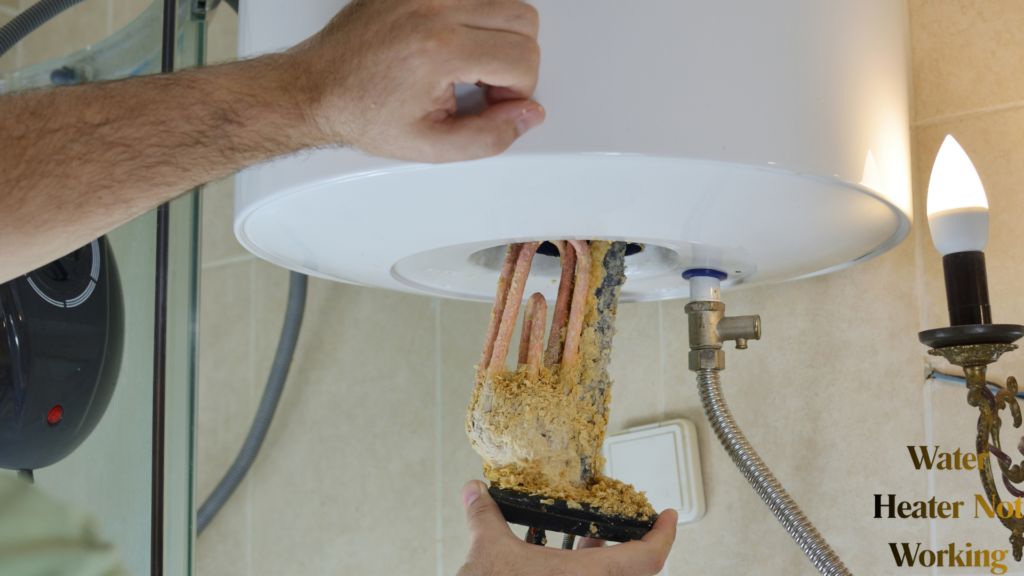
Loud noises during heating almost always heavy mineral sediment, very common in Lake Travis hard water areas.
Rusty or Discolored Water
Brown, orange, or metallic-tasting water indicates anode rod failure or tank corrosion inside.
Lake Travis Hard Water Note
If you live near Lake Travis, Lago Vista, Bee Cave, or Lakeway you’re dealing with some of Texas’s hardest water. Mineral scale buildup inside your tank is one of the top reasons locals need water heater repair in Lake Travis every 3–5 years earlier than the national average.
Step 2 Safety Check First (Always Do This)
Before you touch anything, run through this quick safety checklist. Skipping this step can turn a minor fix into a dangerous situation.
- Smell for gas near the unit. If you detect a sulfur/rotten egg odor, leave immediately and call your gas company.
- Check for active water leaking around the base or connections before attempting any inspection.
- For electric water heaters locate your breaker panel and confirm the water heater breaker is OFF before opening any panels.
- For gas water heaters set the gas valve knob to the “Pilot” position before doing anything else.
- Do not attempt to drain a tank that shows signs of severe corrosion or bulging call a professional immediately.
- Check for scalding risk if water is unusually hot or steam is escaping from the T&P valve, this is an emergency.
STOP Call Now If You Have These Signs
A hissing T&P relief valve, gas smell, bulging tank walls, or no hot water after a recent flood are all emergencies. Do not attempt DIY repair. Call our emergency plumbing service or 911 immediately.
Step 3 Troubleshoot by Water Heater Type
Now let’s get into the actual diagnosis. The steps differ significantly depending on whether you have a gas, electric, or tankless water heater. Find your type below:
Electric Water Heater — No Hot Water
- 1Reset the BreakerGo to your electrical panel and look for a breaker labeled “Water Heater” or “WH.” If it’s in the middle or OFF position, switch it fully OFF then back ON. Wait 30–60 minutes before testing hot water.
- 2Press the High-Temperature Reset ButtonThere’s a red reset button (usually behind an access panel on the tank). Push it firmly. If it trips again repeatedly, your upper heating element is likely failed.
- 3Check the Thermostat SettingThe thermostat is behind the same access panel. It should be set between 120°F–140°F. If it’s lower, adjust it. If it doesn’t respond, the thermostat itself may need replacement.
- 4Test the Heating ElementsWith power OFF, use a multimeter to test the resistance of both upper and lower elements. A reading of 10–16 ohms is normal; “OL” or “1” means the element is burned out and needs replacement.
Gas Water Heater — No Hot Water
- 1Check the Pilot LightLook through the small viewing window near the bottom of the unit. If you see no flame, the pilot has gone out this is the #1 cause of no hot water on gas units in Lake Travis.
- 2Relight the Pilot (follow the label on your unit)Turn the gas knob to PILOT. Hold down the pilot button and press the igniter repeatedly until you see a flame. Hold for 30 seconds, then slowly release. Turn the knob to ON and increase to desired temperature.
- 3Pilot Won’t Stay Lit? Thermocouple IssueIf the pilot lights but goes out when you release the button, the thermocouple (the safety sensor) is faulty. This is a ~$20 part but requires professional replacement for safety compliance.
- 4Check Gas SupplyConfirm your gas is on and the shutoff valve near the unit (should be parallel to the pipe) is open. Check that other gas appliances in your home are working.
Tankless Water Heater Error Codes & Issues
- 1Note the Error Code on the DisplayTankless heaters display error codes. Common ones include E1 (ignition failure), E3 (overheating), E5/E6 (water flow sensor issues). Look yours up in the manual or manufacturer website.
- 2Check for Mineral Scale BuildupIn Lake Travis’s hard water environment, tankless units need annual descaling. If yours hasn’t been serviced in 2+ years, scale could be restricting flow and causing shutdowns.
- 3Clean or Replace the Inlet Filter ScreenA clogged filter reduces water flow below the minimum required to trigger heating. Remove, rinse, and reinstall.
- 4Reset the UnitPower off at the breaker or unplug, wait 60 seconds, then restore power. This clears many temporary fault codes.
Still No Hot Water? Get Same-Day Service in Lake Travis
If none of these steps restored hot water, it’s time to call the pros. Our team offers same-day water heater repair across the Lake Travis area.
Step 4 Common DIY Fixes You Can Do Today
Some water heater problems are genuinely manageable without a service call. Here’s what you can safely do yourself:
Flush Sediment from the Tank
Sediment accumulation is extremely common with Lake Travis hard water. Annual flushing extends your water heater’s life by years and restores heating efficiency. Here’s how:
- Turn the thermostat to the “Vacation” or lowest setting (electric: turn off the breaker).
- Shut off the cold water supply valve at the top of the tank.
- Attach a garden hose to the drain valve near the bottom of the tank.
- Run the hose to a drain, bucket, or outside (the water will be hot and sandy).
- Open a hot water tap inside your home to allow air into the system.
- Open the drain valve and let the tank fully drain.
- Briefly open the cold water supply to stir up remaining sediment, drain again.
- Close the drain valve, remove the hose, restore cold water supply, and restore power/gas.
Pro Tip for Lake Travis Homeowners
If your tank drains slowly (under 2 gallons per minute), sediment has likely clogged the drain valve itself. At this point, attempting to flush can make the situation worse contact a professional water heater repair service to handle it safely.
Replace the Anode Rod
The anode rod is a sacrificial metal rod inside your tank that prevents corrosion. It should be inspected every 3 years and replaced when more than 50% depleted. Replacing it yourself (with the right wrench) is a legitimate DIY job that can add 5+ years to your tank’s life. You’ll need a 1–1/16″ socket wrench and a new magnesium or aluminum rod for about $20–$40.
Adjust the Thermostat
The EPA recommends 120°F to prevent scalding and bacteria growth. Many tanks ship set to 140°F. Adjusting your thermostat to 120°F–130°F can reduce energy bills by 4–22% and reduce risk of scalding, which is especially important for households with young children or elderly adults. This is a 2-minute DIY adjustment.
Insulate Your Pipes & Tank
Lake Travis’s summer heat and occasional cold snaps can both affect water heater efficiency. Pre-cut foam pipe insulation (under $10 at hardware stores) on the first 6 feet of hot and cold water pipes improves standby efficiency noticeably. An insulation blanket on older tanks (pre-2004) can also help.
Step 5 — When to Stop DIY and Call a Pro
There’s no shame in calling a professional in fact, knowing when not to DIY is one of the smartest things a homeowner can do. Here’s a clear guide:
| Problem | DIY-Friendly? | Recommended Action |
|---|---|---|
| Pilot light went out | Yes | Relight per label instructions |
| Tripped breaker | Yes | Reset breaker, then test |
| Thermostat adjustment | Yes | Adjust to 120°F–130°F |
| Annual sediment flush | Yes (if drain valve works) | Follow flush procedure above |
| Thermocouple replacement | No — gas safety | Call professional water heater repair |
| Heating element replacement | Only if experienced | Recommended: fix water heater near you |
| T&P relief valve discharge | No — pressure risk | Call immediately — can be dangerous |
| Water around the tank base | No | Could be tank failure — call pro now |
| Gas smell near unit | Never | Leave home, call gas co. + emergency plumbing |
| Tank older than 10–12 years | Consider replacement | Get a hot water heater repair service assessment |
Lake Travis-Specific Water Heater Concerns
Living near Lake Travis comes with unique plumbing challenges that homeowners in other parts of Texas don’t always face. Here’s what sets your situation apart:
Hard Water & Mineral Scale The #1 Local Problem
Water hardness in the Lake Travis, Lakeway, Bee Cave, and Lago Vista areas typically runs 15–25+ grains per gallon (GPG) classified as “very hard.” For context, the national average is around 7 GPG. This means your water heater accumulates mineral scale at 2–3× the national rate, dramatically reducing efficiency and lifespan. Signs include rumbling/popping sounds during heating, reduced hot water output, and higher energy bills.
If you haven’t had your tank flushed and inspected in the past year, a visit from a professional Tankless Water heater repair service is overdue and could prevent a far more expensive early replacement.
Seasonal Temperature Swings
Lake Travis summers push temperatures above 100°F, while cold fronts can bring hard freezes in winter. In summer, water entering your tank from outdoor supply lines can be unusually warm, which occasionally confuses thermostats and leads to lukewarm complaints. In winter freezes, outdoor pipes and tankless units installed in garages or exterior enclosures are vulnerable to freezing and cracking.
Homes on Well Water
Several properties around Lake Travis draw from private wells, which often have even higher mineral content than municipal supply. Well water users should flush tanks every 6 months (not annually) and may benefit significantly from a whole-home water softener paired with their water heater.
High-Flow Demand During Summer Hosting
Lake Travis living often means pool parties, boat days, and hosting. If your water heater struggles to keep up with high-demand periods, it may be undersized for your actual household needs especially as families grow. A tankless upgrade or an additional storage unit may be worth considering. Our team can assess whether your current setup matches your lifestyle.
Need a Local Expert Who Knows Lake Travis Water?
Our licensed plumbers have serviced hundreds of homes in Lago Vista, Lakeway, Bee Cave, and Spicewood. We know the local water chemistry and what it does to your system.
Step 6 — Repair vs. Replace: Making the Right Call
Once you’ve determined the issue requires professional attention, the next question becomes: should you repair it or replace it entirely? Here’s a straightforward framework to guide that decision:
The 50% Rule
If the repair cost exceeds 50% of the cost of a new unit, replacement is almost always the smarter financial choice. For example, if a new 40-gallon tank runs $900–$1,200 installed, and you’re quoted $600 for repairs on a 9-year-old unit, replacement makes more sense especially given the harder remaining years ahead.
Age Is the Key Factor
- Under 6 years old:Repair is almost always the right call. Units at this age have most of their life ahead of them.
- 6–10 years old:Evaluate repair cost against replacement. Start budgeting for eventual replacement.
- Over 10 years old:Strongly consider full replacement, especially for tank-style units. Lake Travis’s hard water often cuts expected lifespan down to 8–10 years vs. the national 12–15.
- Any age with significant rust/corrosion:Replace. No repair will fix a corroded tank it’s only a matter of time until a full rupture.
Energy Efficiency Upgrade Opportunity
If you’re replacing an older standard unit, today’s high-efficiency models (especially heat pump water heaters) can cut water heating costs by 60–70%. Given that water heating accounts for roughly 18% of a home’s energy bill, the ROI on a modern unit is typically 3–5 years. Our team can walk you through options that qualify for federal tax credits when you schedule a hot water heater repair service consultation.
Emergency Situations — What to Do Right Now
Some water heater situations can’t wait. Here’s how to handle the most critical scenarios before help arrives:
Active Water Leak from the Tank
- Turn off the cold water supply valve (usually above the tank, turn clockwise).
- Turn the water heater to the “Vacation” or off setting (electric: flip the breaker).
- If water is spreading toward electrical outlets or appliances, shut off electricity to the area at your panel.
- Call our emergency plumbing leak detection service immediately active leaks can cause structural damage within hours.
T&P (Temperature & Pressure) Relief Valve Discharging
If the T&P valve (usually a metal arm on the side of the tank) is hissing, dripping continuously, or discharging water, this indicates dangerously high temperature or pressure inside the tank. This is a serious safety situation. Do not try to plug it the valve is your tank’s only safety relief. Immediately reduce the thermostat setting, turn off the water heater, and call for same-day water heater repair. A failed T&P valve can result in tank explosion in extreme cases.
Gas Smell Near Your Water Heater
If you detect any odor of gas (sulfur/rotten eggs) near your water heater: do not turn any switches on or off, do not use your phone inside the building, open windows and doors, exit immediately, and call your gas company and 911 from outside. Do not re-enter until cleared by authorities. After the emergency is resolved, have the appliance inspected by our team before restoring service.
24/7 Emergency Plumbing Lake Travis
For urgent leaks, flooding, or unsafe pressure situations, our team offers emergency response across Lake Travis, Lakeway, Lago Vista, Bee Cave, and Spicewood. Visit our Emergency Plumbing Leak Detection page or call us directly for immediate dispatch.
Preventive Maintenance — Keep Your Water Heater Healthy Year-Round
The best water heater repair is the one you never need. With a simple annual maintenance routine, most Lake Travis homeowners can extend their unit’s life by 3–5 years and avoid the most common failures.
Annual Maintenance Checklist
- Flush the tank— remove sediment buildup every 12 months (every 6 months for well water users).
- Inspect the anode rod— replace when more than 50% depleted. Plan for every 3–5 years.
- Test the T&P relief valve— lift the lever briefly to ensure it opens and reseats properly. Replace every 5 years regardless.
- Check the temperature setting— confirm 120°F–130°F for efficiency and safety.
- Inspect supply line connections— look for corrosion, moisture, or weeping at fittings.
- Check the expansion tank(if installed) — squeeze it to confirm it isn’t waterlogged.
- For tankless units— professional descaling service annually to remove mineral buildup from the heat exchanger.
- Visually inspect the flue(gas units) — look for blockages, rust, or disconnection at the vent pipe.
Consider a Water Softener
Given Lake Travis’s particularly hard water, a whole-home water softener is one of the best investments a homeowner can make. It protects not just your water heater, but all plumbing fixtures, appliances, and even your skin and hair. Ask our team about softener installation when you schedule your next water heater repair in Lake Travis visit.
Frequently Asked Questions — Lake Travis Homeowners
How long does a water heater last in Lake Travis?
Standard tank water heaters typically last 8–12 years in the Lake Travis area shorter than the national average of 10–15 years due to hard water mineral accumulation. Tankless units typically last 15–20 years with proper annual maintenance and descaling. If your unit is approaching or past these milestones, schedule an inspection with a hot water heater repair service to assess its remaining life.
Why do I run out of hot water so fast?
Several causes are common in this area: heavy sediment reducing usable tank capacity, a failed lower heating element (electric units), a broken dip tube allowing cold water to mix into the hot zone, or a tank that’s simply undersized for your household. In most cases, a professional diagnosis will pinpoint the issue quickly.
Is same-day water heater repair available in Lake Travis?
Yes. Allstate Plumbing, Heat & Air offers same-day water heater repair for the Lake Travis area including Lakeway, Bee Cave, Lago Vista, and Spicewood, subject to scheduling availability. We prioritize households with no hot water and elderly or disabled residents.
What’s the difference between a gas and electric water heater repair?
Gas units involve fuel supply, pilot lights, thermocouples, and combustion venting repairs require gas-certified technicians. Electric units involve heating elements, thermostats, and electrical connections. Both types require licensed professionals in Texas. If you’re unsure which type of repair you need, contact our team we handle both as part of our professional water heater repair service.
Should I install a tankless water heater in my Lake Travis home?
Tankless units offer significant energy savings (20–35% on water heating costs) and provide “unlimited” hot water on demand ideal for larger Lake Travis homes with high demand. The trade-off is higher upfront cost ($1,200–$3,500 installed) and the need for annual professional descaling given local water hardness. For most homeowners replacing a unit over 10 years old, tankless is worth serious consideration.
How much does water heater repair cost in Lake Travis?
Minor repairs (thermocouple, element replacement, thermostat) typically run $150–$400. More significant issues (gas valve, major component failure) can run $400–$700. Full replacement ranges from $900–$2,500 depending on unit type and installation complexity. For an accurate estimate, the best step is a fix water heater near you diagnosis call we provide upfront pricing before any work begins.
No Hot Water?
We Fix It Today.
Same-day service available in Lake Travis, Lakeway, Bee Cave & Lago Vista. Schedule Repair Call Now– (737) 313-2650
Leave a Reply