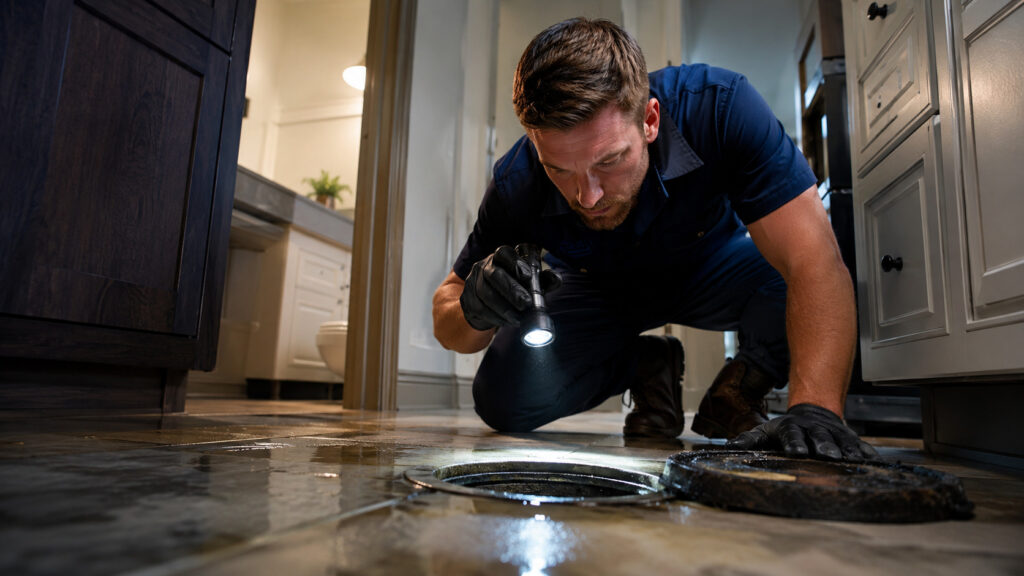
One of the most common calls we get at Allstate Plumbing Heat & Air goes something like this: “My drain is backing up do I have a clog or something worse?” It’s a great question, and getting the answer right matters. A simple drain clog is a minor inconvenience you can often resolve quickly. A main sewer line backup is a plumbing emergency that can flood your home with sewage and cause thousands of dollars in structural damage if left unaddressed.
For Austin and Lake Travis homeowners where clay-heavy soil, aging pipes, and tree root pressure are all working against you knowing the difference could save you from a very bad week.
Here’s exactly how to tell them apart.
What Is a Drain Clog?
A drain clog is a blockage localized to a single drain line. It happens when materials like grease, hair, soap scum, food debris, or “flushable” wipes accumulate in one branch of your home’s plumbing and restrict or stop water flow.
Where drain clogs happen most often:
- Kitchen sinks (grease and food buildup)
- Bathroom sinks and tubs (hair and soap)
- Toilets (wipes, paper towels, foreign objects)
- Floor drains (debris and sediment)
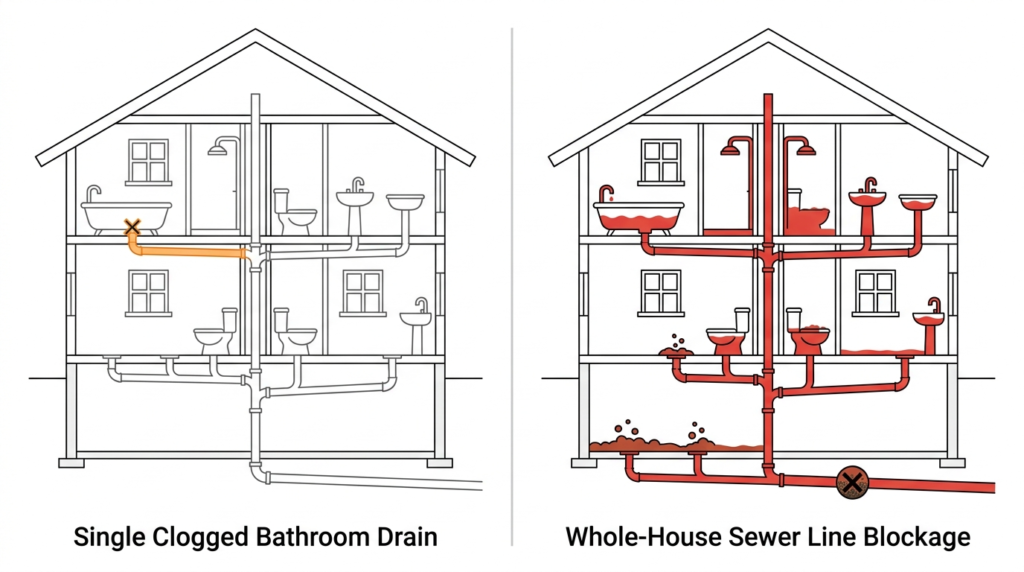
Because a drain clog is confined to one fixture or one branch line, only that specific drain is affected. Your kitchen sink backs up, but your bathtub drains fine. Your toilet is slow, but everything else in the house works normally.
This is the single most important clue when diagnosing what you’re dealing with.
Our Drain Cleaning service handles these localized blockages fast often within a single visit, without the need for heavy equipment.
What Is a Main Sewer Line Backup?
Your home’s main sewer line is the single large pipe typically 4 to 6 inches in diameter that carries all of your household wastewater to the municipal sewer system or your septic tank. Every drain in your house, from every sink, toilet, shower, and appliance, feeds into this one pipe.
When the main sewer line becomes blocked or damaged, there is nowhere for waste to go. Instead of flowing out to the street, sewage gets pushed back up through the path of least resistance usually the lowest drains in your home like floor drains, ground-floor toilets, or bathtubs.
Main sewer line blockages are caused by:
- Tree root intrusion (extremely common in Austin’s limestone and clay soil)
- Grease buildup over years of use
- Foreign objects lodged deep in the line
- Pipe collapse or offset joints in older homes
- Heavy rain overwhelming the system (relevant for Lake Travis and Hudson Bend properties near the waterline)
The key distinction: a main sewer line backup affects multiple drains simultaneously. You’re not dealing with one slow fixture. You’re dealing with every drain in the house misbehaving at once.
5 Signs You Have a Main Sewer Line Backup (Not Just a Clog)
1. Multiple Drains Are Slow or Backing Up at the Same Time
If your kitchen sink, bathroom sink, and shower are all draining slowly at once that’s your biggest red flag. A clog can’t be in three places simultaneously. When multiple fixtures fail together, the blockage has to be downstream where all those lines converge: the main sewer line.
2. Your Toilet Gurgles When You Run the Sink
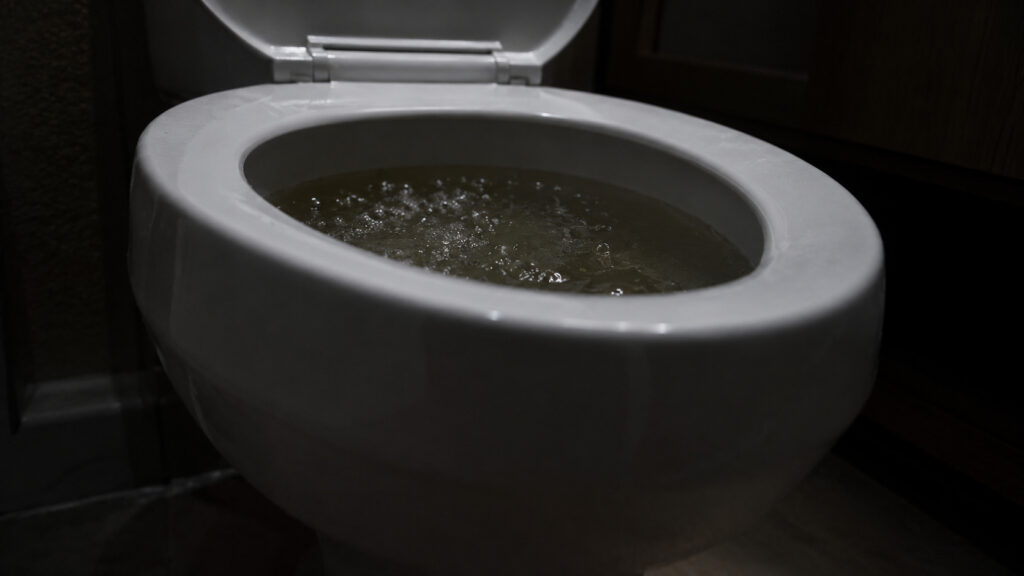
Turn on your bathroom sink and watch your toilet. If you hear gurgling or see bubbles in the toilet bowl, air is being forced back through the system because the main line is blocked. Water flowing through the pipes is displacing air, and that air has nowhere to go except back up through your toilet’s trap.
This is a clear, reliable sign of a main line problem.
3. Water Backs Up in Strange Places
Flush the toilet and water comes up in the bathtub. Run the washing machine and the floor drain backs up. These cross-fixture reactions happen because waste is being redirected when it can’t flow forward. When Allstate’s sewer line team sees this pattern, a main line blockage is almost always confirmed.
4. Sewage Odor Coming from Multiple Drains
One slow drain might smell musty. A main sewer line backup produces unmistakable sewage gas odor from multiple drains throughout the house. If you’re smelling raw sewer smell from your floor, your toilet, and your sink drain simultaneously, the main line is backed up and sewer gases are escaping.
This is also a health hazard sewer gases contain hydrogen sulfide and methane, which can cause respiratory issues and, in confined spaces, become dangerous. Don’t ignore this sign.
5. Sewage Coming Up Through Floor Drains or Bathtubs
This is the most serious sign and means the backup has progressed to the point of overflow. Raw sewage backing up into your home is a Category 3 water contamination event the most severe classification and requires immediate professional response.
If you’re at this stage, stop using all water in the home and call our 24/7 Emergency Plumbing line immediately.
The DIY Test: How to Quickly Tell the Difference at Home
Before you call, you can do a quick self-diagnosis in about two minutes.
Step 1: Go to the lowest point in your home (basement, ground floor, or garage floor drain if you have one).
Step 2: Run water from two different fixtures simultaneously the kitchen sink and a bathroom faucet, for example — for about 30 seconds.
Step 3: Watch the floor drain and/or the lowest toilet.
- If nothing happens: You likely have a localized clog in one specific branch.
- If the floor drain gurgles or backs up: You have a main sewer line issue.
- If the toilet bubbles while you run the sink: Main line blockage.
This test won’t tell you exactly where the blockage is or how serious the damage is, but it gives you a confident first answer to guide your next step.
What Happens Next: How Each Problem Gets Fixed
Fixing a Drain Clog
Most drain clogs are resolved with one of three methods depending on location and severity:
- Drain snake (auger): A cable is fed into the drain and rotated to break up or retrieve the blockage. Best for hair clogs, grease plugs, and object obstructions in branch lines.
- Hydro jetting: High-pressure water blasts through the pipe and scours the walls clean. Our Hydro Jetting service is ideal for grease-heavy kitchen drain lines or recurring clogs that snaking alone won’t resolve.
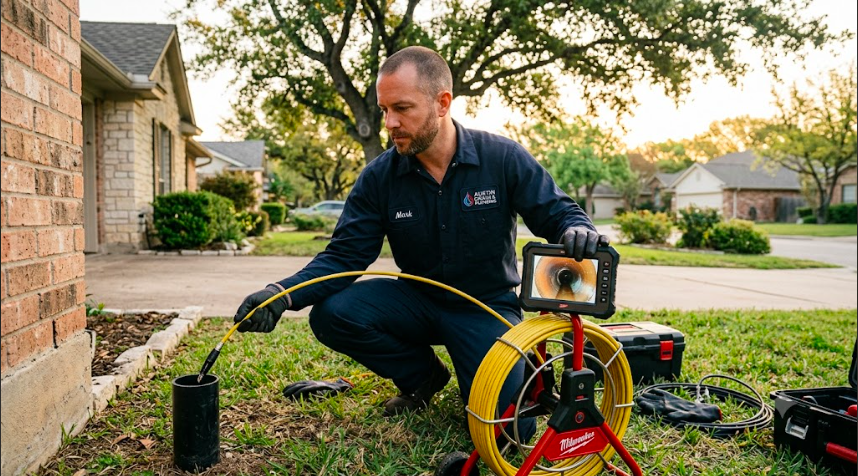
- Drain camera inspection: If clogs keep coming back, our Drain Camera Inspection puts a waterproof camera inside the pipe so we can see exactly what’s causing the problem whether it’s buildup, pipe damage, or root intrusion.
Fixing a Main Sewer Line Backup
Main sewer line blockages require heavier intervention and always warrant a professional camera inspection first to locate the exact point and cause of the blockage.
Depending on what the camera reveals, the solution may be:
- Hydro jetting the main line: Effective for grease and debris blockages
- Root cutting + jetting: Removes tree root intrusion that’s common in Austin’s older neighborhoods and the Lake Travis area
- Spot repair: If one section of pipe is cracked or offset, our team can repair just that section without full replacement
- Full sewer line replacement or trenchless reline: Required for collapsed or severely damaged pipes
If sewage has already backed up into your home, the cleanup is a separate and equally important step. Raw sewage is a biohazard and must be handled properly to prevent mold growth and structural damage. For homeowners who need professional water and sewage damage restoration after a backup event, the team at Lake Charles Water Damage Restoration handles exactly this type of remediation with IICRC-certified technicians available 24/7.
Why Austin & Lake Travis Homes Are Especially Vulnerable
Tree roots. Austin’s mature live oaks, cedar elms, and cypress trees are stunning and aggressive. Their root systems grow toward moisture, which means they grow toward your sewer line. Hairline cracks in older pipes are all it takes for roots to begin infiltrating, and they grow fast. Neighborhoods like Lakeway and Hudson Bend, where established trees sit close to waterfront homes, see root intrusion issues at a higher rate than newer developments.
Aging infrastructure. Many Austin homes built in the 1960s–1990s have cast iron or clay sewer pipes that are now 30–60 years old. These materials corrode, crack, and offset over time. Combined with Austin’s expansive clay soil which contracts and swells with every drought-to-rain cycle pipe movement and joint failure are common.
Heavy rainfall events. When major rain hits the Lake Travis area, saturated ground can push tree roots harder against pipes, and overloaded municipal systems can increase backpressure on residential lines. We see an uptick in sewer backup calls after every significant storm event.
According to This Old House, opening the sewer cleanout cap outside your home during an active backup can sometimes relieve internal pressure but this should only be done when it’s safe to access, and it’s never a substitute for professional repair.
Health Risks: Why You Should Never Ignore a Sewer Backup
Sewage backup is classified as Category 3 (black water) contamination the most hazardous level of water intrusion. It contains bacteria like E. coli and salmonella, viruses, fungi, and parasites. Contact with this water or even breathing the fumes poses real health risks, especially for children, elderly individuals, and anyone with a compromised immune system.
Per EPA indoor air quality guidelines, any materials that have been saturated with sewage-contaminated water (drywall, carpet, insulation) need to be professionally assessed and in most cases removed, because mold can begin growing within 24–48 hours of water exposure.
This is not a situation to clean up with a mop and bucket. If sewage has entered your home, call professionals for both the plumbing fix and the cleanup.
Quick Reference: Drain Clog vs. Main Sewer Line Backup
| Symptom | Drain Clog | Main Sewer Line Backup |
|---|---|---|
| Only one drain affected | ✅ Yes | ❌ No |
| Multiple drains slow at once | ❌ No | ✅ Yes |
| Toilet gurgles when sink runs | ❌ No | ✅ Yes |
| Water backs up in other fixtures | ❌ No | ✅ Yes |
| Sewage odor from multiple drains | ❌ No | ✅ Yes |
| Sewage backing up from floor drain | ❌ No | ✅ Yes |
| Fix: Drain snake / jetting | ✅ Usually resolves it | ❌ Partial at best |
| Fix: Camera + main line clearing | Sometimes needed | ✅ Always required |
| Health hazard level | Low | Hig, Cat. 3 biohazard |
When to Call an Emergency Plumber
Don’t wait if you’re experiencing any of the following:
- Multiple drains backing up simultaneously
- Sewage smell throughout the home
- Any sewage coming up from floor drains or bathtubs
- Toilet overflowing after flushing with water going to other drains
- Wet spots in your yard with sewage odor (indicating an underground break)
Our 24/7 Emergency Plumbing team serves Austin, Lakeway, Hudson Bend, and all Lake Travis area communities with same-day response. We have the camera equipment and hydro jetting tools on our trucks, so we diagnose and clear most main line blockages in a single visit.
The Bottom Line
A drain clog is a minor plumbing problem. A main sewer line backup is a plumbing emergency. The difference comes down to one question: is one fixture affected, or are multiple fixtures affected at the same time?
If the answer is multiple or if you’re seeing any of the five signs described above stop using water in your home, avoid flushing toilets, and call a licensed plumber immediately. The longer you wait, the more pressure builds in the line, and the more likely sewage is to overflow into your living space.
Allstate Plumbing Heat & Air has been diagnosing and clearing Austin and Lake Travis sewer lines for over 15 years. Call us at (737) 313-2650 or contact us online for fast, same-day service.
Leave a Reply