
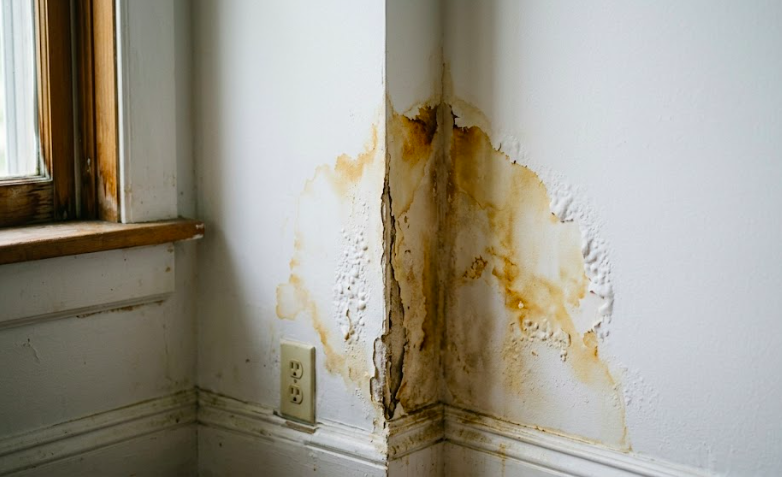
A leaking pipe rarely announces itself. There’s no dramatic burst, no flood across the kitchen floor just a slow drip inside a wall cavity, doing damage for weeks or months before anyone notices. By the time most homeowners spot a problem, the leak has already soaked insulation, warped framing, and possibly started growing mold where no one can see it.
If you live in or around Austin and Lake Travis, where older plumbing, shifting clay soil, and seasonal temperature swings all put extra stress on pipes, this is a risk worth taking seriously. Here’s how to catch a hidden leak early before it becomes a much bigger (and more expensive) problem.
Why Walls Hide Leaks So Well
Most home plumbing runs behind drywall, inside wall cavities packed with insulation. That insulation is great at trapping heat and just as good at trapping moisture. A small leak can sit there for a long time, slowly saturating the materials around it, without a single visible drop ever reaching your floor. The damage is happening; you just can’t see it yet.
That’s exactly why hidden leaks are so much more destructive than the leaks you can see. A dripping faucet gets fixed in a day. A leak inside a wall can run for months.
8 Warning Signs You Shouldn’t Ignore
1. Your Water Bill Jumps for No Reason
If your usage habits haven’t changed but your bill has crept up month over month, a hidden leak is one of the most common explanations. The EPA’s WaterSense program notes that household leaks waste more than 1 trillion gallons of water nationwide every year much of it from leaks homeowners don’t even know exist. Comparing your winter water usage against your meter readings is one of the simplest ways to catch a leak before it shows up anywhere else.
2. A Musty or Mildew Smell That Won’t Go Away
If a room smells damp or musty even after cleaning, trust your nose. That smell is often the first sign of moisture trapped somewhere it shouldn’t be usually inside a wall, under flooring, or behind a cabinet.
3. Discoloration or Staining on Walls or Ceilings
Yellow, brown, or copper-colored stains especially ones that seem to grow slowly over time — almost always mean water is tracking through your wall or ceiling from somewhere upstream of where you can see it.
4. Peeling, Bubbling, or Warped Paint and Wallpaper
Paint and wallpaper are designed to sit on dry drywall. When moisture builds up behind them, they bubble, peel, or separate from the surface. This is often one of the earliest visible clues, even before staining appears.
5. Soft or Warped Drywall
Press gently on a suspect area. Drywall that feels soft, spongy, or slightly bowed has likely absorbed water and lost structural integrity. This is a sign the leak has been active for a while.
6. The Sound of Running Water With Everything Off
If you hear a faint hissing, dripping, or trickling sound inside a wall when no fixtures are in use, that’s about as direct a signal as you’ll get. Water moving where it shouldn’t be is rarely silent if you listen closely.
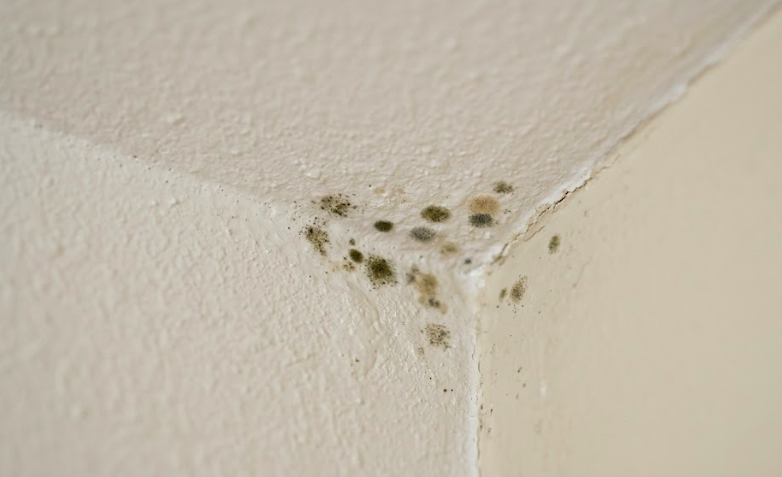
7. Visible Mold or a Persistent Allergic Reaction
Mold needs moisture to grow, and a hidden leak provides exactly that. According to the CDC, mold growing indoors almost always points to an underlying water or moisture problem that needs to be fixed not just cleaned up cosmetically. If you or your family are dealing with unexplained coughing, sinus irritation, or allergy-like symptoms that improve when you’re away from home, it’s worth investigating.
8. Warped Flooring or Baseboards Near a Wall
Hardwood that cups, laminate that bubbles, or baseboards that separate from the wall near a suspected leak site usually means water has already spread beyond the wall cavity itself.
Don’t Wait for the “Big” Leak
It’s tempting to put off an inspection when nothing looks urgent. But hidden leaks rarely stay small. The longer water sits inside a wall, the more it spreads into subfloors, into adjoining rooms, into insulation that has to be fully replaced rather than dried out. What starts as a $200 repair can turn into a multi-thousand-dollar renovation if it’s left long enough.
What to Do If You Suspect a Hidden Leak
- Check your water meter. Turn off every fixture and appliance, note the meter reading, wait two hours without using any water, then check again. Any movement means you have a leak somewhere in the system.
- Narrow down the location. Pay attention to which rooms have odors, stains, or sounds this helps a plumber pinpoint the source faster.
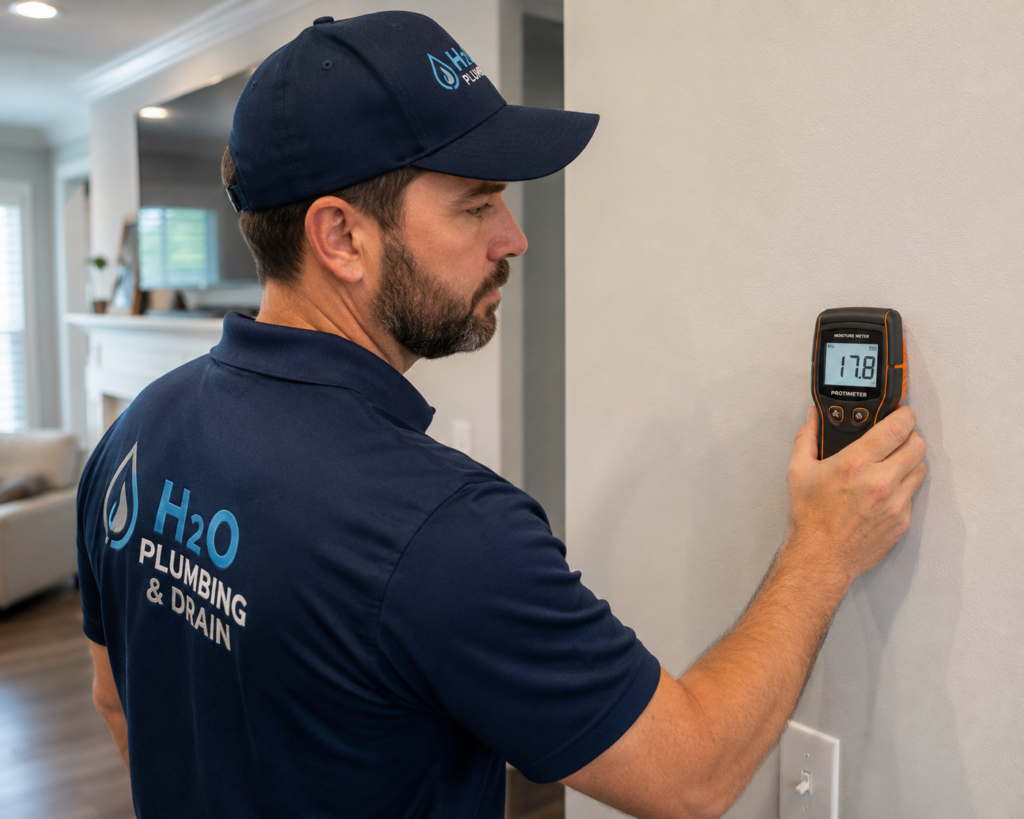
- Call a licensed plumber before it gets worse. Leak detection equipment (acoustic sensors, moisture meters, thermal imaging) can find a leak inside a wall without tearing it open first. If you’re in the Austin or Lake Travis area, Allstate Plumbing Heat & Air can run a proper leak inspection and catch problems like this before they turn into bigger repairs.
If the Damage Is Already Done
If you’ve already found soaked insulation, soft drywall, or visible mold, drying it out yourself usually isn’t enough. Water trapped inside framing and insulation can take weeks to fully dry on its own, and mold can take root in as little as 24–48 hours. Professional restoration involves moisture mapping, industrial-grade drying equipment, and sometimes partial drywall removal to stop the damage from spreading further.
For a closer look at how professionals actually assess and dry out this kind of damage, McAllen TX Water Damage walks through the moisture-mapping and structural drying process restoration crews use on homes affected by long-term, undetected leaks the same fundamentals apply no matter where the leak happened.
The Bottom Line
Hidden water leaks are easy to miss and expensive to ignore. A rising water bill, a musty smell, a stain that won’t go away none of these are things to wait out. Catching a leak early is almost always cheaper, faster, and far less disruptive than dealing with the aftermath.
If something on this list sounds familiar, don’t wait for it to get worse. Schedule a leak inspection with Allstate Plumbing Heat & Air today and get ahead of the problem before it spreads.
Leave a Reply