
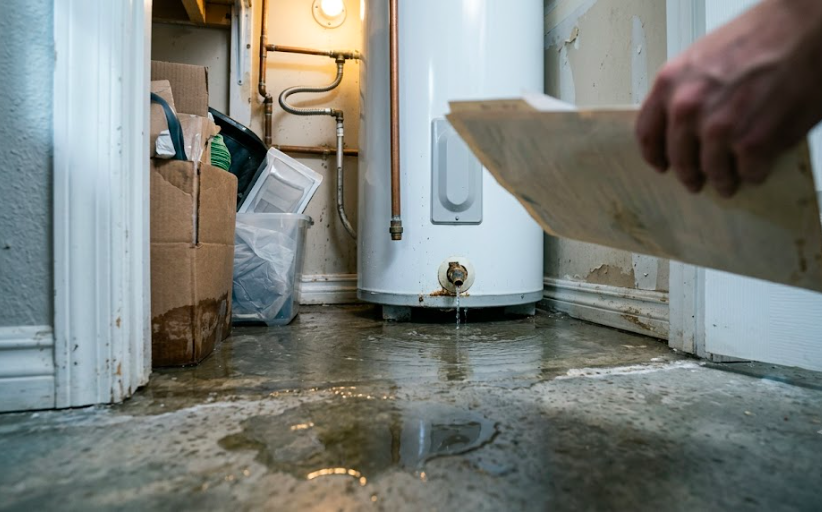
You walk into the garage, utility closet, or basement and find water spreading across the floor. The source is your water heater. Your first thought is probably the same as most homeowners’: “Is this covered by my insurance?”
The honest answer is it depends. Most standard homeowners policies cover the damage a sudden water heater failure causes. They usually do not cover the water heater itself if it simply wore out, and they almost never cover flooding from outside your home.
This guide explains what is typically covered and what is excluded. It also covers the situations that lead to denied claims, and the steps to take in the first 48 hours so your claim has the best chance of approval.
Quick note: Every policy is different. This article is general educational information, not legal or insurance advice. Always read your own policy and confirm details with your insurance agent or carrier.
The Short Answer: Water Heater Leaks vs. Flooding
| Situation | Typically Covered? | Why |
|---|---|---|
| Water heater tank bursts suddenly and floods the room | Usually yes (for resulting damage) | Sudden and accidental water damage is a covered peril |
| Slow leak from a corroded fitting over months | Usually no | Gradual leaks are treated as a maintenance issue |
| Replacing the old water heater itself | Usually no | Wear and tear and age are excluded |
| Burst supply line or pipe connected to the heater | Often yes | Sudden discharge from plumbing is commonly covered |
| Rising water from storm surge, overflowing rivers, or heavy rain | No (needs flood insurance) | Standard policies exclude flood |
| Sewer or drain backup | Only with an endorsement | Water backup is usually an optional add-on |
How Homeowners Insurance Treats Water Heater Leaks
The Sudden and Accidental Rule
Standard homeowners policies (such as HO-3 forms) cover damage from sudden and accidental water discharge from plumbing, heating, or appliance systems. If your tank ruptures, a valve fails without warning, or a connection bursts, the water damage that follows is generally a covered event.
Typical covered damage includes:
- Flooring, hardwood, laminate, tile subfloor, and carpet
- Drywall and insulation soaked by the release
- Cabinets and built-in fixtures near the heater
- Personal belongings stored nearby (under your contents coverage)
- Temporary living costs if the home is unlivable during repairs (Additional Living Expenses)
What Is Usually Not Covered
Insurers draw a hard line between a sudden event and a problem that developed over time. Common exclusions include:
- The water heater itself: If the unit failed because of age, rust, or sediment buildup, replacing it is typically your responsibility. Insurance is not a warranty program.
- Gradual or long-term leaks: A slow drip that caused rot, rust, or mold for weeks or months is usually denied as continuous or repeated seepage.
- Neglected maintenance; If the carrier decides the failure came from ignored repairs, such as a corroded anode rod, a failed T&P valve, or visible rust, the claim may be reduced or denied.
- Mold: Many policies cap mold coverage or exclude it unless it follows a covered water event and is addressed promptly.
Why Age Matters More Than You Think
Most tank-style water heaters last roughly 8 to 12 years. If yours is near or past that range and fails, adjusters may point to wear and tear. That affects how much of the loss they pay. Even when the heater itself isn’t covered, the water damage it caused can still be, as long as the failure was sudden.
Flooding Is a Different Story
This is where many homeowners get caught off guard.
Standard homeowners insurance does not cover flood damage. In insurance terms, “flood” generally means water that enters your home from the outside: heavy rain runoff, overflowing rivers, storm surge, or rapidly accumulating surface water.
A burst water heater inside your home is not a flood in the insurance sense. It’s an internal plumbing discharge. That distinction is the reason one policy can cover a ruptured tank and still deny damage from a storm that sends water through your doors.
Flood Insurance: The Separate Policy You May Need
Flood coverage comes from a separate policy, available through the National Flood Insurance Program (NFIP) or private insurers. You can learn how it works and check your risk at FloodSmart.gov, the official NFIP resource.
Important details to know:
- Flood policies usually have a waiting period (commonly 30 days) before coverage starts. You can’t buy one when a storm is already on the radar.
- Building coverage and contents coverage are often separate.
- Even homes outside designated high-risk zones can flood, and a large share of flood claims come from moderate or low-risk areas.
Water Backup Coverage
If water comes up through a floor drain or sump instead of pouring in from outside, that’s a water backup claim. It’s typically not included in a standard policy. It’s an inexpensive endorsement in most cases, and it’s worth asking your agent about. For a plain-language overview of what different policies include, the Insurance Information Institute is a reliable consumer resource.
Real-World Scenarios: Covered or Not?
Scenario 1: The tank splits open overnight.
You wake up to two inches of water in the utility room. The failure was sudden, so the resulting damage to floors, walls, and belongings is likely covered, subject to your deductible. The heater itself likely is not.
Scenario 2: A small drip behind the unit for months.
You discover rotted subflooring and mold. The carrier points to long-term seepage. This claim is likely denied or heavily limited.
Scenario 3: The T&P valve discharges and the line bursts.
A pressure relief failure sends water through the wall. Because the discharge was sudden, it’s commonly covered.
Scenario 4: A storm pushes water into the garage where the heater sits.
This is flooding from outside. Without a flood policy, it is not covered, even though the water heater is damaged.
Scenario 5: Heavy rain backs up the floor drain.
Without a water backup endorsement, this is likely not covered.
What to Do in the First 48 Hours
How you respond right after the leak can make or break your claim. Insurers expect you to prevent further damage, which is called your duty to mitigate.
- Stop the water safely: Shut off the cold water supply valve to the heater. If it’s a gas unit, turn the gas to “off” or pilot. For an electric unit, switch off the breaker. If water is near outlets or the panel, stay out and call a professional.
- Document everything before cleanup: Take photos and video of the heater, the source of the leak, the water line on walls, and every damaged item.
- Call your insurance company promptly: Report the loss quickly and ask what they need. Delays can hurt a claim.
- Start mitigation right away: Remove standing water, run fans and dehumidifiers, and pull up soaked carpet or padding. Keep every receipt.
- Keep the failed part: If possible, save the leaking heater or fitting. An adjuster or plumber may need to inspect it to confirm it was a sudden failure.
- Get a professional assessment: A licensed plumber can confirm the cause, and a restoration company can document moisture levels and the scope of work. Both reports strengthen your claim.
If your property has taken on significant water and needs drying, extraction, or mold prevention, a certified restoration team can handle it. For example, McAllen water damage restoration specialists at mcallentxwaterdamage.com provide emergency water extraction, structural drying, and documentation that insurers commonly request.
Common Reasons Water Heater Claims Get Denied
- Lack of maintenance records No flushing history, no inspections, no repairs on file.
- Slow, ongoing leaks discovered late.
- Late reporting after the damage had time to spread.
- No mitigation (leaving soaked materials in place, which causes mold).
- Confusing flood with plumbing discharge and filing under the wrong coverage.
- Unpermitted or improper installation, such as a missing expansion tank, no drain pan, or a code violation.
How to Protect Yourself Before a Leak Happens
Prevention is cheaper than any claim. A few simple habits reduce your risk and show insurers you maintain your home.
- Flush the tank annually to remove sediment that corrodes the tank bottom.
- Inspect the anode rod every 2 to 3 years and replace it when it’s heavily corroded.
- Test the T&P (temperature and pressure relief) valve once a year.
- Install a drain pan with a drain line under the heater.
- Add a leak detector or automatic shutoff valve. Small water sensors are inexpensive and can alert your phone the moment moisture appears.
- Know where your main water shutoff is and make sure everyone in the household does too.
- Replace aging units proactively. Once a tank passes the 10-year mark, plan for replacement before it fails. The U.S. Department of Energy also publishes helpful guidance on efficient water heating and maintenance.
- Review your policy yearly. Check your deductible, water damage limits, and whether you have water backup and flood coverage.
Questions to Ask Your Insurance Agent
Bring this checklist to your next policy review:
- Does my policy cover sudden water heater rupture damage?
- How does my policy define sudden and accidental?
- Is there a separate deductible or sublimit for water damage or mold?
- Do I have water backup coverage? If not, what would it cost to add?
- Am I in a flood zone, and should I have a separate flood policy?
- Does my policy pay replacement cost or actual cash value for damaged items?
- Does my coverage include additional living expenses if I have to leave my home?
Frequently Asked Questions
Does homeowners insurance cover a water heater that just stopped working?
Generally no. If the unit simply wore out, replacement is usually a homeowner expense. Coverage applies to the sudden water damage a failure causes, not the appliance’s end of life.
Will my premium go up after a water damage claim?
It can. Many insurers consider claim history when pricing renewals. For small losses, some homeowners decide to pay out of pocket. Your deductible and the extent of the damage should guide that decision.
Is a leaking water heater a flood for insurance purposes?
No. Flood insurance applies to water coming from outside your home. A leak from your own appliance falls under your homeowners policy.
How long do I have to file a claim?
Deadlines vary by policy and state, but you should report damage as soon as you discover it. Waiting can jeopardize coverage.
Does insurance cover mold after a water heater leak?
Sometimes, if the mold results from a covered event and you acted quickly. Many policies limit mold coverage, so check your policy language.
Should I repair or replace a leaking water heater?
If the tank itself is leaking, replacement is the only fix. If it’s a fitting, valve, or connection, a repair may be possible. A licensed plumber can tell you which applies.
Final Thoughts
Homeowners insurance can be a financial lifesaver when a water heater fails suddenly, but only if you understand the limits. Sudden bursts are often covered for the resulting damage, while old age, slow leaks, and outside flooding usually are not. The best strategy combines three things: a policy that fits your risk, regular maintenance, and fast action when something goes wrong.
If your water heater is aging, leaking, or showing signs of trouble, don’t wait for a small problem to become a major claim. Get it inspected or replaced before it fails. Our team at All State Plumbing Heat & Air Lake Travis can help with water heater repair, replacement, and emergency service.
Leave a Reply