
Most homeowners fear the dramatic a pipe bursting at 3 AM, water flooding the hallway, chaos. And yes, that’s a serious emergency. But ask any certified water damage restoration technician which scenario they’ve seen cause more total destruction, and the answer might surprise you: the slow leak usually wins.
Both situations cause real damage. Both require professional attention. But they behave very differently, and understanding that difference can save you from a five-figure repair bill or worse, a mold problem you don’t discover for months.
Here’s an honest, side-by-side breakdown.
The Burst Pipe: Dramatic, Destructive – But Visible
A burst pipe is hard to ignore. You’ll hear it, see it, or step in it. The damage is immediate and obvious: standing water, soaked drywall, ruined flooring. In severe cases, ceilings collapse. Appliances short out. The chaos is real.
But here’s the thing – visibility is also a form of protection.
When a pipe bursts, you call someone immediately. The response is fast. A restoration crew extracts the water, sets up drying equipment, and the clock starts. According to the Insurance Information Institute, water damage claims are among the most common homeowner insurance events in the U.S. and burst pipe claims, because they’re reported quickly, tend to resolve with less secondary damage than their slow counterparts.
What typically causes a burst pipe?
- Sudden freezing temperatures (less common in South Texas, but not impossible during a hard freeze)
- Water hammer pressure surges in the line
- Aging galvanized or polybutylene pipes that finally fail
- Physical damage during renovation or landscaping
The damage timeline for a burst pipe:
| Time elapsed | What’s happening |
|---|---|
| 0–1 hour | Active flooding, saturation of flooring and baseboards |
| 1–6 hours | Water migrates into walls, subfloor, adjacent rooms |
| 6–24 hours | Drywall begins to swell and delaminate |
| 24–48 hours | Mold risk escalates sharply |
The key: if you respond within the first few hours, a burst pipe despite the drama is often a contained, recoverable event.
The Slow Leak: Quiet, Patient, and Far More Destructive
A slow leak has no dramatic entrance. It might be a pinhole in a supply line behind your refrigerator. A hairline crack in a bathroom supply valve. A slow drip from a corroded fitting under the bathroom sink. You won’t hear it. You won’t see it. And it will quietly destroy your home for weeks, months, or years before you find it.
This is what makes slow leaks genuinely dangerous.
By the time most slow leaks are discovered, the damage has already compounded:
- Subfloor rot: Wood and OSB subfloor materials absorb moisture over time and begin to soften, warp, and eventually rot often requiring full section replacement rather than simple drying
- Hidden mold colonies: Mold doesn’t need a flood to establish itself. A persistently damp wall cavity or cabinet base is an ideal environment. The CDC notes that mold can begin growing within 24–48 hours of a moisture event and a slow leak is essentially a continuous moisture event
- Structural compromise: Floor joists, wall studs, and sheathing exposed to chronic moisture weaken over time. In severe cases, load-bearing elements are affected
- Elevated insurance complexity: Many policies exclude damage from continuous or repeated seepage if it can be shown the homeowner should have detected it meaning a slow leak caught late can result in a denied claim
Common slow leak sources:
- Supply lines behind refrigerators, dishwashers, and washing machines
- Toilet tank fittings (the flapper valve drip you tune out)
- Under-sink connections, especially at compression fittings
- HVAC condensate drain lines (extremely common in South Texas’s year-round cooling demand)
- Roof flashing failures that allow slow infiltration during rain
- Slab leaks broken lines beneath the concrete foundation
The damage timeline for a slow leak:
| Time elapsed | What’s happening |
|---|---|
| Week 1–2 | Moisture accumulates in adjacent materials, invisible to the eye |
| Week 3–4 | Drywall begins to soften internally; paint may blister |
| Month 2+ | Mold colonies establish; subfloor or framing begins to deteriorate |
| Month 6+ | Structural damage possible; significant remediation required |
So Which Is More Dangerous?
On pure destruction potential: the slow leak.
A burst pipe causes more water volume in a shorter time but a slow leak causes more total damage when integrated over weeks or months. The reason is simple: duration multiplied by deniability. Homeowners minimize the signs (it’s probably just condensation), and by the time the damage is undeniable, remediation has become a major project.
That said, both require professional intervention. The mistake is treating either one as a DIY fix.
Warning Signs You Shouldn’t Ignore
Whether you’re dealing with a slow leak or suspect one, watch for:
- Unexplained spike in your water bill (even $15–20/month above normal is worth investigating)
- Soft or spongy spots in flooring, especially near appliances or bathrooms
- Musty or earthy smell in specific rooms or cabinets
- Bubbling or peeling paint on walls or ceilings
- Discoloration or water staining on drywall
- Warped baseboards or door frames that suddenly don’t close properly
Any one of these warrants an inspection. Two or more is a near-certainty that water damage is already in progress.
What a Professional Does That You Can’t
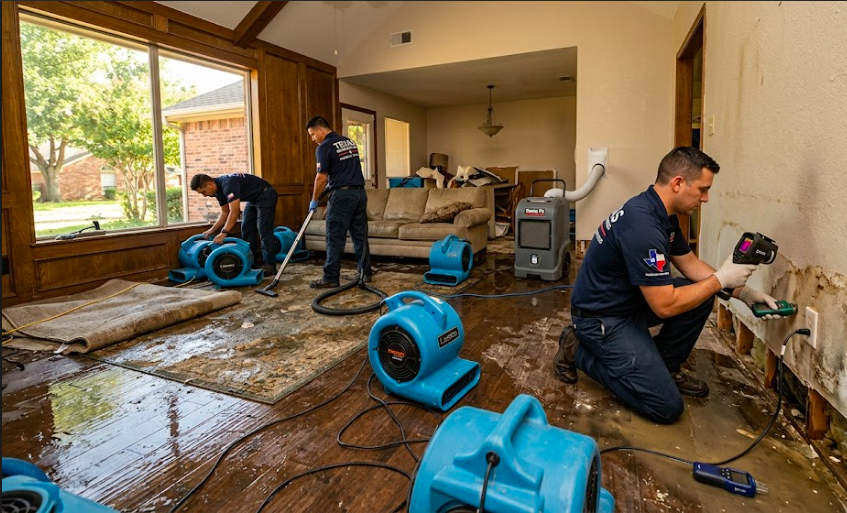
Both slow leaks and burst pipes require more than drying the visible surface. According to the IICRC S500 Standard for Water Damage Restoration, professional restoration follows a science-based protocol moisture mapping, psychrometric calculation, and drying validation that can’t be replicated with box fans and towels.
A qualified restoration company will:
- Use thermal imaging to locate hidden moisture inside walls and ceilings
- Deploy commercial drying equipment calibrated to the materials present
- Monitor daily moisture readings until all assemblies reach target moisture content
- Identify and document mold risk before it becomes active remediation
- Provide an insurance-grade report covering scope, timeline, and methodology
Dealing With Water Damage in McAllen, TX?
Whether you’ve just discovered a burst pipe or finally tracked down the source of that musty smell, the response timeline matters enormously.
FloodFix Solutions – mcallentxwaterdamage.com serves McAllen and the greater Rio Grande Valley with 24/7 emergency water damage restoration. Their certified technicians handle everything from initial extraction and structural drying to full mold remediation and insurance documentation for both sudden and long-term water damage events.
If you’re not sure what you’re dealing with, call for an assessment. Early intervention is always cheaper than deferred repair.
Visit mcallentxwaterdamage.com for 24/7 Emergency Response →
Prevent the Problem Before It Starts
The best water damage is the one that never happens. A few habits that significantly reduce your risk:
- Check supply line hoses on your washing machine, dishwasher, and refrigerator every 12 months braided stainless steel lines last longer than rubber
- Know where your main shutoff valve is and make sure it actually closes fully
- Schedule annual HVAC maintenance condensate line clogs are a top slow-leak culprit in Texas
- Monitor your water bill month-over-month a leak doesn’t need to be visible to show up in your usage data
- Consider a whole-home leak detection device (brands like Flo by Moen integrate with your main line and alert you to abnormal flow patterns)
The Bottom Line
Burst pipes are emergencies. Slow leaks are silent disasters. Both are serious. But if you had to rank which causes more cumulative damage to more homes over time it’s the slow leak, by a wide margin, precisely because it goes unnoticed.
If you suspect either don’t wait. The restoration math is simple: every hour of delay increases your total cost.
Related: Emergency Plumbing in the Lake Travis Area
Plumbing failures are often the root cause of both burst pipes and slow leaks. If you’re in the Lake Travis area and need fast, reliable plumbing service water heater repair, pipe inspection, or emergency shutoff work our team is ready.
Explore Emergency Plumbing & Water Heater Services at Allstate Plumbing, Heat & Air →
Last updated: September 2026 | For informational purposes only. Always consult a licensed restoration or plumbing professional for property-specific assessment.
Leave a Reply