If you own a home near Lake Travis, you already know what Texas summers feel like. Your air conditioner runs almost non-stop from May through September and that’s exactly what makes it one of the sneakiest sources of water damage in your home.
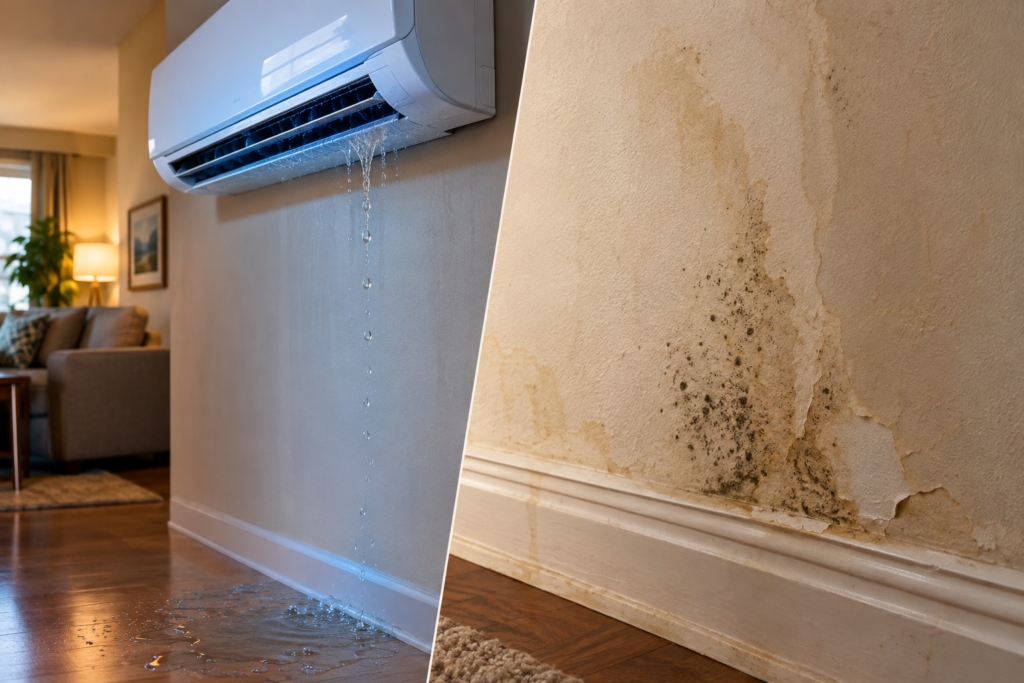
Most homeowners never think about their AC unit as a water threat. But every day it runs, your system is removing gallons of moisture from the air. When that process goes wrong even slightly water can quietly pool behind walls, soak into insulation, and create the perfect conditions for mold and structural damage long before you ever notice a problem.
This guide breaks down exactly how it happens, what to watch for, and what to do if you suspect your AC has already caused damage.
How Your AC System Produces Water (And Why That Matters)
Your air conditioner doesn’t just cool the air it dehumidifies it. As warm, humid air passes over the evaporator coil, moisture condenses out of the air and drips into a collection pan, then exits through a condensate drain line.
In a properly functioning system, that water safely exits your home. But several common failures can redirect that water somewhere it absolutely shouldn’t go:
- Clogged condensate drain lines – Algae, dust, and debris build up quickly in the humid Texas climate, causing the drain to back up and overflow.
- Cracked or rusted drain pans – Over time, the pan beneath your evaporator coil corrodes or cracks, allowing water to escape directly onto surrounding materials.
- Frozen evaporator coils – When airflow is restricted or refrigerant is low, coils freeze. When they thaw, they release a sudden flood of water that your drain pan often can’t handle.
- Improper installation or loose connections – Poorly fitted components can direct condensate water into wall cavities or ceiling spaces instead of the drain.
- Ductwork condensation – In homes where ductwork runs through unconditioned attic space (very common in the Lake Travis area), the temperature difference between the cool duct and the hot attic air causes exterior condensation on ducts, which drips onto attic insulation and framing.
Why Lake Travis Homes Are at Especially High Risk
The combination of extreme summer heat, high outdoor humidity, and heavy AC usage creates a perfect storm for condensate-related water problems. When your AC runs eight to twelve hours a day, even a slow drip from a compromised drain line adds up to gallons of water per week soaking into your walls, subfloor, or ceiling.
Add to that the fact that many homes near Lake Travis have attic-mounted air handlers where a leak is completely invisible until water stains appear on the ceiling below and you have a recipe for serious, hidden water damage that goes unnoticed for months.
Warning Signs Your AC May Already Be Causing Water Damage
Don’t wait until you see standing water. These are the early signs that your AC system may be leaking inside your home:
- Water stains on ceilings or walls near the air handler or vents
- Musty or moldy odors when the AC runs, even if you can’t see any visible mold
- Peeling or bubbling paint near baseboards, ceilings, or around vents
- Warped or buckled flooring, especially wood or laminate near interior walls
- Higher-than-normal humidity indoors despite the AC running constantly
- The AC unit cycling on and off frequently or not cooling as effectively as before
- Visible rust or water marks on or around the indoor air handler unit
Any one of these symptoms warrants a closer look. Two or more together is a strong signal that water has already been sitting somewhere it shouldn’t be.
What Happens When AC Water Damage Goes Untreated
This is where homeowners often underestimate the problem. A slow, hidden leak doesn’t just cause surface staining it causes cascading damage over time:
Week 1–2: Water saturates drywall and insulation. Structural materials begin absorbing moisture.
Week 2–4: Mold spores, which are naturally present in every home environment, begin colonizing the wet area. This is invisible at first mold grows inside walls, behind drywall, and in insulation cavities.
Month 1–3: Mold colonies spread. Drywall begins to deteriorate. Wood framing softens and loses structural integrity. The musty smell becomes noticeable.
Beyond 3 months: Full mold remediation, drywall replacement, possible structural repair, and potentially HVAC repair all become necessary. What might have been a simple fix becomes a $10,000–$30,000 restoration project.
This isn’t meant to scare you it’s meant to help you understand why acting early matters so much.
How to Prevent AC-Related Water Damage
The good news is that most AC water damage is entirely preventable with consistent maintenance:
1. Schedule annual AC tune-ups. A qualified HVAC technician will inspect the drain pan, clean the condensate line, check refrigerant levels, and ensure the evaporator coil is functioning correctly. For Lake Travis homeowners, pre-season maintenance in late March or April before the heavy cooling season begins is ideal.
2. Pour diluted bleach into the drain line monthly. A simple mix of one part bleach to sixteen parts water poured into the drain line access port prevents algae and mold buildup that causes clogs.
3. Install a float switch on your drain pan. This inexpensive device automatically shuts off your AC system if the drain pan fills with water, preventing overflow before it can cause damage. It’s one of the best investments you can make for a system in an attic space.
4. Check your drain pan regularly. If you have accessible indoor units, take a look at the drain pan every few months. Any standing water is a sign the drain line is partially or fully blocked.
5. Inspect attic ductwork for condensation. If your ducts run through unconditioned attic space, check periodically that duct insulation is intact and that there’s no moisture accumulation on or around the ductwork.
6. Keep air filters clean. Restricted airflow from a clogged filter is one of the leading causes of frozen coils. Change filters every 30–60 days during peak cooling season.
What To Do If You Suspect AC Water Damage Already Exists
If you’re seeing any of the warning signs above, here’s the right sequence of steps:
Step 1: Turn off the AC system. Don’t run it until the source of the leak is identified and fixed you’ll only add more water to an already saturated area.
Step 2: Call your HVAC technician. Get the leak source repaired before anything else. Restoring water-damaged materials without fixing the cause first is a waste of time and money.
Step 3: Assess the extent of the damage. Use a moisture meter or call a water damage restoration professional to evaluate how far the moisture has spread. Drywall and insulation can hold moisture well beyond the visibly affected area.
Step 4: Contact a water damage restoration company. If the damage extends beyond a small surface area, professional drying and remediation equipment is necessary. Industrial air movers, dehumidifiers, and moisture monitoring tools are required to properly dry out a structure household fans simply don’t cut it.
If you’re dealing with water damage in another part of the country, the team at Akron OH Water Damage provides expert water damage restoration services and understands the urgency of getting structures properly dried before mold sets in. Their approach to fast response and thorough structural drying is a model of what professional restoration should look like and a useful resource if you’re helping a family member or friend in the Ohio area navigate similar issues.
When To Call a Restoration Professional vs. DIY
Minor surface moisture like a small water stain on a ceiling that has since dried may not require professional intervention if the leak source is fixed and the area dries completely within 24–48 hours.
But professional restoration is the right call when:
- The affected area is larger than about 10 square feet
- The moisture has been present for more than 48 hours
- You smell mold or mildew
- Water has reached flooring, subfloor, or wall cavities
- You can see visible mold growth
The EPA’s mold and moisture guide provides clear guidance on when DIY cleanup is appropriate and when professional remediation is required an excellent resource for any homeowner assessing damage severity.
For understanding the broader connection between HVAC systems and indoor air quality, the American Society of Heating, Refrigerating and Air-Conditioning Engineers (ASHRAE) publishes accessible standards and resources that explain how proper system maintenance directly protects your home’s health.
Protect Your Lake Travis Home Before the Next Hot Season Hits
Your AC system is one of the hardest-working appliances in your home and in the Lake Travis climate, it earns every bit of that description. A little preventive attention goes a long way toward keeping it from becoming the source of one of the most expensive and disruptive problems a homeowner can face.
If you’re overdue for an AC inspection, or if you’ve noticed any of the warning signs listed above, don’t wait. The cost of a tune-up is a fraction of what water damage restoration costs and the peace of mind is priceless.
Contact Allstate Plumbing, Heat & Air – Lake Travis to schedule your AC inspection and make sure your system is protecting your home, not quietly damaging it.
Leave a Reply