Your water heater sits in a closet, a garage corner, or a basement doing its job quietly, every single day, year after year. Most homeowners open that door maybe twice in a decade. That invisibility is exactly why water heater failures are one of the leading causes of catastrophic residential water damage in the United States.
At Allstate Plumbing Heat & Air Lake Travis, we respond to calls every week from homeowners who discovered a puddle or worse, saturated drywall, warped flooring, and mold all traceable back to a water heater that gave subtle warnings for months before finally giving out. This guide is designed to change that pattern for you.
Why Water Heaters Fail and Why It Catches People Off Guard
A standard tank water heater holds 40–80 gallons of pressurized hot water around the clock. The inner lining corrodes gradually. The sacrificial anode rod the component specifically designed to absorb corrosion and protect the tank depletes over time and should be replaced every 3–5 years. Most homeowners have never heard of it.
When the tank lining finally corrodes through, or when fittings, valves, or supply lines fail, the result isn’t always a dramatic gush. Often it’s a slow, hidden seep that saturates insulation, subfloor, and framing over weeks before anyone notices. By then, mold growth may have already begun.
Critical Risk
A pinhole leak in a hot water tank can release thousands of gallons over 24–48 hours before triggering a floor drain or being noticed. If your unit is older than 10 years and has never been professionally inspected, that risk is elevated significantly.
7 Warning Signs Your Water Heater Is About to Fail
Don’t wait for a flood. These signs indicate a unit that’s under stress or in early failure:
- Rusty or discolored water – brown or reddish hot water is a red flag that internal corrosion is shedding into your supply line.
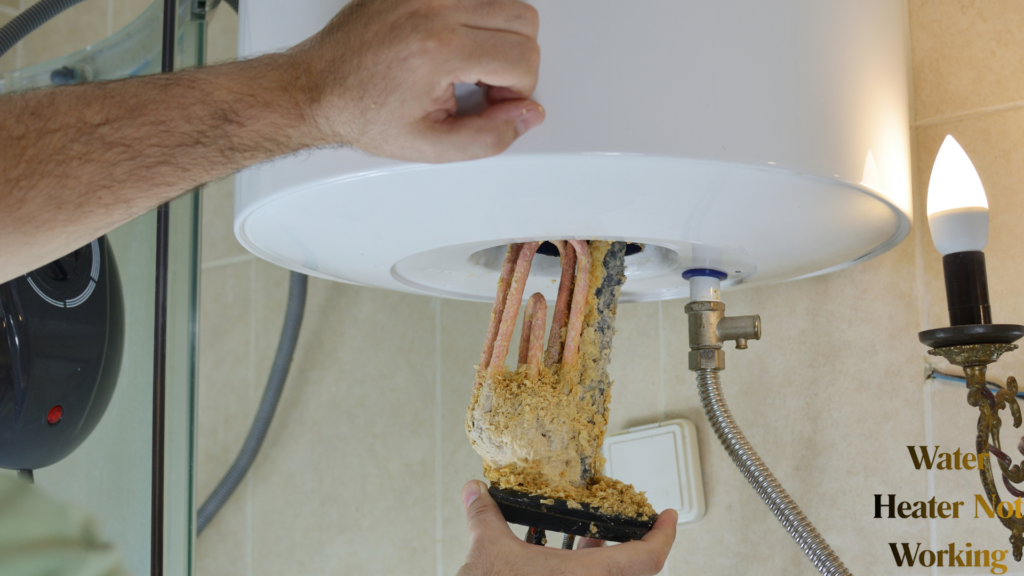
- Popping, banging, or rumbling sounds – sediment buildup on the heating element causes these sounds and dramatically reduces efficiency.
- Water pooling at the base – even a small puddle under the tank warrants immediate professional inspection.
- Inconsistent water temperature – cycling between cold and hot water suggests thermostat failure or sediment interference with heating.
- Unit older than 10 years – manufacturer warranties and functional lifespans typically max out in this range.
- Pressure relief valve leaking or dripping – this safety device vents excess pressure; a weeping valve means internal pressure is problematic.
- Visible corrosion on connections or the tank body – surface rust near fittings or around the base indicates active moisture compromise.
What Happens When a Water Heater Fails Without Warning
When a tank ruptures or supply lines fail, the water damage can spread fast and deeply. Within the first hour, water migrates under flooring, into wall cavities, and through subfloor gaps. Within 24 hours, structural materials begin to swell and warp. Within 48–72 hours depending on moisture levels and ventilation mold spores can begin colonizing wet surfaces.
This is why immediate professional water damage restoration response matters. If you’re in Northeast Ohio and have experienced a water heater failure, Akron OH Water Damage Restoration provides emergency water extraction, structural drying, and mold prevention services for exactly this type of event. Acting within the first few hours dramatically reduces total damage and restoration costs.
Pro Tip from Our Technicians
Install a water leak detection sensor (under $30) near the base of your water heater. These battery-powered devices emit a loud alarm at the first sign of moisture giving you time to shut off the water supply before serious damage occurs. Some smart models send your phone an alert instantly.
A Plumber’s Prevention Checklist – Do This Twice a Year
Most water heater failures are preventable. Work through this list with your plumber or do the visual checks yourself:
Check the anode rod-This sacrificial rod protects your tank from corrosion. It should be inspected and replaced every 3–5 years. Ask your plumber to do this at your next service call – most homeowners are shocked it exists.
Flush sediment annually-Sediment builds at the bottom of the tank and acts as insulation between the heating element and water forcing the unit to work harder. A yearly flush extends lifespan and efficiency significantly.
Test the pressure relief (T&P) valve-Lift the lever briefly to confirm it opens and snaps back shut. If it drips or sticks, it needs replacement this is a critical safety component that also protects the tank from over-pressure rupture.
Inspect all fittings, connections, and supply lines-Look for white mineral deposits, green oxidation, or moisture at any joint. Flexible braided supply lines have a finite lifespan if yours look cracked or kinked, replace them before they fail.
Know your shut-off valve location-Every household member who might be home alone should know exactly where the cold water inlet shut-off valve is on the heater and how to close it quickly in an emergency.
Install a drip pan with drain line-If your water heater isn’t already on a drip pan that drains to a floor drain or exterior, this is a simple and inexpensive upgrade that can prevent minor seeps from becoming major events.
When Should You Replace Instead of Repair?
As a general rule, if your water heater is older than 10 years and has needed more than one repair in the past 24 months, replacement is likely the smarter financial decision. Repair costs on an aging unit can quickly add up to half or more of the cost of a new system without addressing the underlying wear.
Modern tankless water heaters, while a larger upfront investment, eliminate the single biggest structural risk entirely: there’s no tank of pressurized water waiting to fail. They also deliver energy savings of 25–35% for most households. Our team at Allstate Plumbing Heat & Air Lake Travis can walk you through which option fits your home’s demand and budget.
If a Water Heater Failure Has Already Happened: First Steps
- Shut off the cold water supplyto the heater immediately find the inlet valve at the top of the unit and close it.
- Turn off electricity or gasto the unit to prevent dry-fire damage or hazards.
- Do not walk through standing waterif there’s any chance electrical outlets or appliances have been compromised.
- Document everythingwith photos and video before any cleanup your insurance claim depends on this evidence.
- Call a water damage restoration professional immediately not in the morning, not after the weekend. Every hour matters for mold prevention.
If you’re in the Akron, Ohio area and facing this situation right now, Akron OH Water Damage Restoration offers 24/7 emergency response with professional-grade water extraction and structural drying equipment. They specialize in exactly this type of fast-response scenario and can help you navigate the insurance documentation process too.
Trusted Resources & Further Reading
- U.S. Department of Energy – Water Heating GuideOfficial guidance on water heater types, efficiency ratings, and installation standards. Great for homeowners comparing tank vs. tankless options.
- EPA – Mold Cleanup in Your HomeThe Environmental Protection Agency’s authoritative resource on mold risks, cleanup safety, and when to hire professional remediation services after a water event.
- Insurance Information Institute – Water Damage & Homeowner’s InsuranceUnderstand exactly what your homeowner’s policy covers (and doesn’t) when it comes to water damage, so you can file an effective claim and avoid surprises.
Don’t Wait for a Flood to Find a Plumber
Schedule a water heater inspection with our Lake Travis team or get emergency help after a water damage event in Akron, Ohio.Schedule an Inspection →
More From Allstate Plumbing Heat & Air
Looking for more ways to protect your home’s plumbing and prevent costly emergencies? These resources from our team cover the most common questions we hear from Lake Travis homeowners:
Leave a Reply